
Sources from Ethiopia indicated that PM Abiy Ahmed is expected to issue a directive to release many prisoners remaining in jail, some of them since 2012.
Lately, the government of PM Abiy has emptied many prisons around the country. The released prisoners include opposition members, journalist, and other political prisoners. However, the release did not include individuals arrested after the Awalia school crisis of 2012.
The Awalia school protests erupted after officials of the school and other Muslim activists protested the alleged government interference in the private affairs of the school. However, government sources alleged its clampdown on the Awalia school protests was because of the infiltration of extremist Muslims activists who were agitating the Muslim community. The protests resulted in the arrest of hundreds of protesters who expanded their demonstration to the Anwar Mosque in the heavily populated area of Mercato.
While the government ordered imams to get reoriented by its choice of a Muslim group known as Ahbash (Abyssinians), many Muslims considered that an interference by the government in their private religious affairs. The move by the government was also resisted by the overwhelming Ethiopian Muslims, largely Suffis, who do not subscribe to the teachings of AlAhbash or the Wahabi strain of Islam. Apparently, the government’s move to introduce AlAhbash’s Muslim teachings was intended to curb the growing influence of the Saudi sponsored Wahabi teachings.
It remains to be seen whether the prime minister will maintain these policies that were implemented by the government of late PM Meles Zenawi in 2012.
An ex-board member of the Awalia school said, “Islam is not new to Ethiopia and it is deeply rooted, we do not need anyone to dictate to us what type of Muslims, we should follow.” He added, “we do not condone fanatic Wahabi teachings developed in Saudi Arabia, nor AlAhbash’s teachings developed in Lebanon.” The AlAhbash movement was founded by the Ethiopian scholar Abdullah al-Harari in the mid 1980 in Lebanon in Lebanon.
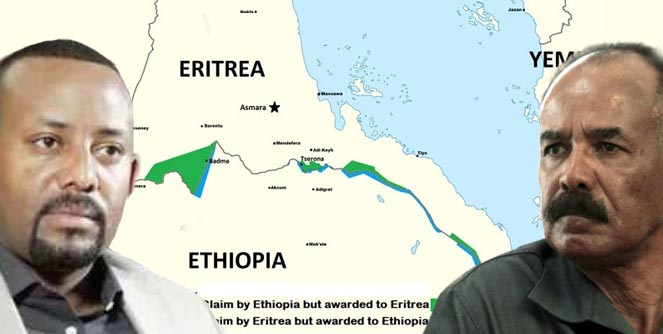
Meanwhile, reports from Ethiopia indicate that the Ethiopian government has reiterated its old position of accepting the Algiers agreement and the decision of the Eritrean-Ethiopian Boundary Commission (EEBC). Officially, both countries have accepted the decisions. However, while Ethiopia insisted on a dialogue between the two countries before demarcation of the border, Eritrea has been adamantly demanding the implementation of the decision immediately.
The two countries have signed the Algiers Peace Agreement on Dec 12, 2000, and the EEBC delivered its decision to the two countries in 2002. However, the “Final and Binding” decisions were never implemented, and the region still lives in a no-peace-no-war situation since the war ended in June 2000. Tens of thousands of soldiers from both sides lost their lives in the border war.
According to the BBC Amharic Service, the EPRDF Executive Committee regular meeting indicated it will accept the Algiers agreement reached between Eritrea and Ethiopia after the end of the border war that the two countries fought almost two-decades ago.
The committee also called to end the “misunderstanding between the people of the two brotherly countries in order to create a lasting peace.”
The Ethiopian government also explained that it accepts the Algiers agreement and the decision of the Eritrea Ethiopian Border Commission in its totality and will work diligently towards its implementation. It also called on the Eritrean government to reciprocate.
Related reading: