
Category: Perspective
-

The Wound and the Cure: How Nehnan Elamanan Damaged Eritrea’s National Unity — and What a Truthful Manifesto Could Have Built Instead
Introduction: The Shadow of a Document There are moments in a nation’s history when a single document bends the arc of its political culture. Sometimes it elevates; sometimes it distorts. Nehnan Elamanan belongs to the latter category. Written in 1971, it did more than justify a factional split. It rewrote the moral grammar of the
-
Protocol, Power, Policy, and the Urgent Need for Institutions
I. A Visit That Reveals More Than It Intended Eritreans have long relied on Awate’s Regional News link to follow developments across the Horn of Africa, a region where every diplomatic gesture carries weight. This week, one story in particular demanded attention: the visit of Eritrea’s minister of trade and industry, Nasreddin Saleh, accompanied by
-
Roots of Resistance: The History of the Arsi Oromo Movement in Building Educational Resistance (1950s–1980s)
BOOK REVIEW Author: Dr. Gemechu Abraham Kurfessa Publisher: The Red Sea Press Publication Year: 2026 Length: 563 pages Roots of Resistance is one of those rare works that doesn’t simply recount history—it unsettles what you thought you understood. Centering on how the Arsi Oromo people used education as a form of resistance from the 1950s
-
The Day After: Preparing Eritrea for its Most Dangerous Transition
There comes a moment in the life of every nation when denial becomes a luxury it can no longer afford. Eritrea is approaching such a moment. Tick‑tock. The eventual death of President Isaias Afwerki—whether tomorrow or years from now—is not a political prediction but an unavoidable biological certainty. What follows will determine whether Eritrea survives
-
Endless Cycle Splits, Mergers, and Rebranding in the Eritrean Opposition
Fragmentation Without Disappearance: The Endless Cycle of Splits, Mergers, and Rebranding in the Eritrean Opposition In the middle of last year, I committed to writing about Eritrean national unity—both in its broad historical sense and within the specific context of the diaspora‑based opposition. As I continue gathering information on the latter, I readily acknowledge that
-
The Limits of Rupture, the Promise of Reform: Rethinking Eritrea’s Transition
When a nation emerges from prolonged authoritarian rule, it eventually confronts a foundational question: do we discard everything associated with the old order and begin again from scratch, or do we recover what was valuable, repair what was broken, and build forward from there? In Eritrea’s case, that dilemma can be framed as Total Reset
-
The Forgotten Blueprint: How Eritrea’s 2001 Party Proclamation Could Rebuild a Nation
Eritrea’s political crisis did not emerge from a vacuum. It is the cumulative product of abandoned institutions, unimplemented laws, and a governing elite that systematically dismantled even the limited frameworks it once claimed to uphold. I use the term elite loosely here, for in the Eritrean context it connotes power without the accompanying attributes of
-
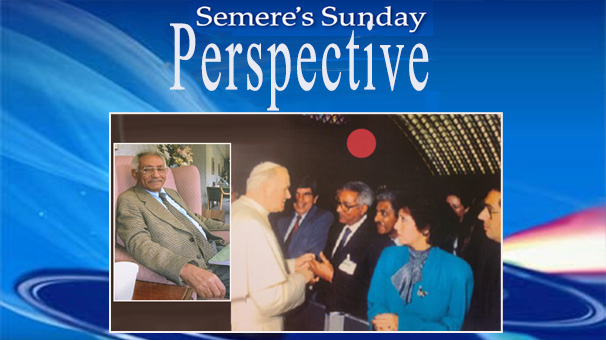
The Unsung Heroes of Our National Unity
There is a Tigrinya saying I learned from my mother: “One who does not do small deeds should not dream of doing bigger things—ንእሽተይ ጽቡቕ ዘይገብር፡ ዓቢ ክገብር ኢሉ ኣይሕሰብ.” In truth, it is the small, consistent acts of goodness that shape our character and ultimately determine the destiny of a people. We are, after
-
National Unity Cannot Be Rebuilt One Community at a Time
Eritreans everywhere recognize the same painful truth: our nation is in deep crisis. Political paralysis, social fragmentation, and the mass flight of our youth have become defining features of our national condition. These burdens do not belong to one region or one religion. They belong to an entire people. My brother, the respected commentator Ismail
-
Trust Over Terror: Unity Built on a Minimum Agenda
Accra, Ghana. The very air here reminds me of what could have been for Eritrea. In the early 1990s, two nations stood at a crossroads. Ghana chose democracy, and today it stands as West Africa’s most stable and consolidated democracy. Eritrea, tragically, chose tyranny and has become a cautionary tale of what is broken in
-
The Eritrean Opposition Must Renounce Violence — Or Remain Irrelevant
The Eritrean opposition in the diaspora faces a credibility crisis so deep that it has become politically paralyzed by it. For more than three decades, it has positioned itself as the alternative to Isaias Afwerki’s rule. Yet inside Eritrea, even citizens who are profoundly dissatisfied with the government remain unconvinced that an opposition‑led transition would
-
What Has Unity Got to Do with Age?
Across Eritrean political discourse—especially within the diaspora—one argument has gathered unmistakable momentum: that leadership of the opposition, and indeed leadership of the Eritrean state itself, where the average age hovers around eighty, must pass to a new generation. At first glance, the demand feels not only reasonable but inevitable. Eritrea is a young nation with
-
Eritrea’s Opposition Has Run Out of Excuses
For more than three decades, Eritrea’s diaspora opposition has lived in a political waiting room—issuing statements, forming committees, dissolving committees, and then repeating the cycle with new names and old habits. The pattern has become so predictable that it no longer shocks anyone. Meanwhile, the regime in Asmera has ruled with total impunity: no constitution,
-
The Echoes of Stagnation: Reclaiming Eritrea’s Future
Through Internal Reckoning and Diaspora Strategy Unity has long eluded Eritreans. The word is invoked so frequently—and so casually—that it has lost much of its moral and political gravity. Yet its overuse does not diminish its necessity. Our repeated failure to achieve unity does not render it obsolete; it simply reveals that our methods have
-
Why the PFDJ Is Afraid of Us: The Strategic Threat of Nationalist Unity
The ruling People’s Front for Democracy and Justice (PFDJ) has not endured through popular consent. It has survived through an engineered system of fear, fragmentation, and narrative domination. Its silence toward nationalist movements is not indifference—it is apprehension. Unified, principled nationalists threaten the regime on every front: politically, strategically, philosophically, and historically. Unity as Memory—and
-
Somaliland, Somalia, and the Ethics of Non‑Alignment
Recognition, Reality, and Responsibility in the Horn of Africa The recognition of Somaliland would mark a historic moment—akin to Eritrea or South Sudan—not a geopolitical earthquake, but a shift whose ripple effects could extend far beyond its borders. Global politics has a way of humbling our certainties: the developments we dismiss as peripheral often become
-
Eritrea at Year’s End: Between Endurance and Exhaustion
As another year closes—the thirty‑fourth since independence—Eritrea stands as a nation defined by contradiction. It is a country that endured colonial rule, international machinations, a short‑lived annexation disguised as a “UN‑supervised federation,” Cold War rivalries, a brutal thirty‑year liberation struggle, a devastating border war, and repeated regional upheavals, yet still struggles to define peace on
-
When Liberation Becomes a Cage: Eritrea’s Unlearned Lessons
Eritrea’s tragic trajectory—after one of the most heroic and costly struggles for independence in modern African history—remains one of the continent’s most heartbreaking stories. By 1991, when Eritrea finally achieved freedom, the lessons of post‑colonial governance were no longer abstract. They had unfolded across Africa and the Global South in full view. Yet, despite these
-
Eritrea Does Not Need Isolation to Survive
For more than three decades, Eritrea’s foreign policy has been shaped by fear—fear of betrayal, fear of encirclement, and fear that engagement is merely a prelude to domination. That fear was forged in war, and at one time it served a purpose. Today, however, it has calcified into a governing doctrine that no longer protects
-
Power, Image, and Machiavellian Survival (7)
Giants and Lilliputians of the HOA: Power, Image, and Machiavellian Survival Part Seven Introduction The central argument of this essay is simple: the Horn of Africa’s instability has never been caused by its diversity, but by leaders who repeatedly manipulate that diversity for political survival. Across Eritrea, Ethiopia, Sudan, Somalia, and Djibouti, rulers have taken