
Category: Horn Echoes
-
When Trust Speaks Multiple Languages
The conversation on trust began in Arabic, when Abdulrazig Karrar invited readers to reflect on how a wounded public might rebuild its moral ground. His words, published in Adoulis, stirred more than sentiment. They reopened an old question: how can a people fractured by suspicion and silence learn again to live in truth? I responded in
-
In Conversation with History
The history of Eritrea cannot be reduced to isolated dates that mark the fall of emperors or the clashes of factions. It must be understood as a continuum in which missed opportunities, fratricidal tragedies, and enduring symbols converge into lessons still awaiting full reckoning. This essay considers three pivotal currents: the slow death of the
-
Why Alemseged, Why? In Context
“History is not the past. It is the present. We carry our history with us. We are our history.” James Baldwin Every Eritrean family carries an unwritten epilogue. A grandfather’s half-told story, a photograph hidden in a drawer, a grave unmarked but remembered by the path to it. These fragments form our private archives. They
-
Reframing Eritrea’s Post-Independence Paradox
For more than three decades, the story of Eritrea has been told in a narrow and predictable register. It begins with the extraordinary military triumph of 1991, moves quickly to the UN-supervised referendum of 1993, pauses briefly on the promise of constitutional drafting, and then hammers home the familiar conclusion: a descent into authoritarianism and
-

The Panopticon Writes Back: On Plagiarism and AI Simulation
I built a café once, not of stone or steam, nor chairs with bentwood backs. It had no street address, yet it knew exactly where it stood: between memory and exile, between the watcher and the watched. In my novel I & Eye, I called it the Panopticon Café. It was where silences had dialects, and
-
Beneath the Rooftop Howl: A Response to Tekeste Negash’s Historiography Shackled by Irredentism
“I saw the best minds of my generation destroyed by madness, starving, hysterical, naked, dragging themselves through the Negro streets at dawn looking for an angry fix…” Allen Ginsberg, Howl, 1956 Disclaimer: This is not a portrait of a man, but of a method. Tekeste Negash’s body may remain in Uppsala, but his arguments walk
-
A Mirror Between Literature and History
In moments of historical rupture, when the line between remembering and rewriting blurs, we return to mirrors, not to admire or accuse, but to see again. This reflection emerges in the wake of a series of meditations on memory, language, and the ethics of naming: The River Remembers. Written during a time marked by silence
-
When the Archive Refuses to Speak (IV)
The River Remembers series “In the next part of this series, we will turn toward what fills the silence: song, orality, fragments, and resistance-in-translation. We will ask what it means to speak with a voice formed in silence and what a new grammar emerges when we no longer rely on inherited tongues alone.” We begin,
-
The River Remembers: The Silence Between Names (Part III)
“From the eye that remembers to the I still learning to see—memory doesn’t merely recall, it refracts.” “What we inherit through the eye is often unresolved; we see what we were taught to remember, not what is.” “The act of seeing is a practice, a discipline; The I must unlearn to perceive anew.”
-
The Blame Loop Has Expired
Nearly a quarter-century after the ministers of Eritrea were made to disappear into silence on September 18, 2001, a date that split a nation’s hopes, the diagnosis of betrayal has calcified into ritual. In a recent article, Dawit Mesfin revisits this now-familiar script: that President Isaias Afwerki duped not only the Eritrean people but the…
-
The River Remembers (Part II): The Archive of the Unsaid
In this installment of The River Remembers, the author dives beneath the surface of colonial history to explore its psychic and linguistic aftermath—what remains unspoken, untranslatable, and unresolved. Through a reflective reading of Tayeb Salih’s Season of Migration to the North, the essay examines how colonialism embeds itself not only in roads and records but…
-
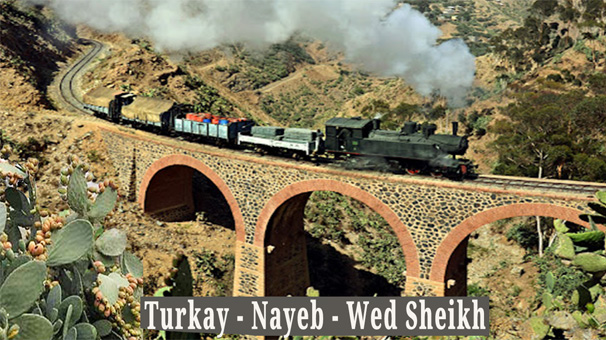
What Memory Chooses, and What It Omits
A lyrical excavation of memory, empire, and resistance, Of Trains, Turkays, and Tongues explores how colonial infrastructures—both physical and linguistic—have been reimagined through song, story, and subversion. From the iron rails of foreign-built trains to the surnames inherited from Ottoman administrators, the essay challenges selective nostalgia and interrogates how power, identity, and language collide. This…
-

Eritrea’s Independence: Celebrate Or Commiserate?
Overview: – There are two parts to this article. First, brief description of two battles heroically fought during the Eritrean armed struggle for national liberation. The purpose of doing so is to commemorate those brave Eritreans who paid the ultimate sacrifice for Eritrea’s full sovereignty. Second, how the hard-gained and long-awaited independence and the dream
-

The Changing History of Keren High School: 1970s to 1990s (Part II)
For some readers this article may contain taboo issues; they are included because telling an incomplete story for historical documentation does not serve future causes. Also, and understandably, some readers may have little or no interest in the articles about Keren High School in particular and Keren in general, as they may think the subject
-
End of Year Message
In my end of year article, I have chosen to remind Awate.com readers about President Barack Obama’s landmark speeches for the purpose of drawing some important lessons. It is customary that people at the end of each calendar year make New Year’s resolutions to change their bad habits and continue strengthening their successful habits. In
-
Towards Sustainable Peace And Justice In Eritrea: Introductory Article (I)
Author’s Comment: – This article is not designed to serve as a framework for the analysis of specific ideas. Rather, its purpose is to touch on issues of broader relevance to the state of Eritrean politics. In sequence, the word ‘peace’ precedes ‘justice’ in the title of the article; I understand for some justice is
-
Lessons to Learn: Extraordinary Australian Political Developments
Australia is the world’s smallest continent, though it is a big country with an area of about (8,468,300 km2). Compared to its size, the Australian population is small (~22 million)[1]. Accordingly, the Australian National Parliament reflects this small[2] population with the House of Representative or Lower House consisting 150 sitting Members of Parliament (MPs) and
-

How And Why I Chose Harmony for Awate.com’s Column
About two weeks prior to Awate.com’s 10th anniversary, the Awate Team sent group email to some of its prolific writers who regularly contribute articles and enrich its website. The email recipients’ list also included people like me who currently are not contributing on a regular basis. The email’s main message was, the Awate Team is
-
Keren High School Reunion: A Missing Perspective and a Way Forward (Part I)
Author’s Comment: – the appropriate website for this article would have been sweetkeren.net, but I have posted it at Awate.com, as the policies of the former ban articles that may have political influence. I do understand Sweet Keren is a social club and I respect the idea that the reunion focus is on promoting social