
Tag: Abiy Ahmed
-
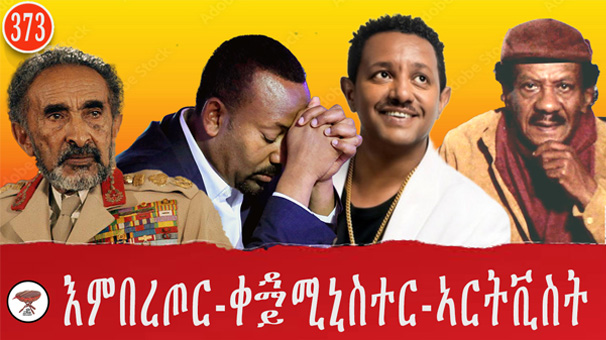
PM Abiy, Teddy Afro, and the Politics of Art
For the past few days, Teddy Afro’s new album has drawn wide attention. A friend told me its lyrics have irritated Prime Minister Abiy Ahmed’s government and sent me a clip of Abiy lecturing parliament about the difference between artists and activists. That pairing—music and political instruction—raises a deeper question: can art ever be separated
-

Abiy’s Errand to Abu Dhabi
-

Power Needs Compliance
Every power structure requires obedience to survive. Intelligent people question authority; obedient people preserve it.
-

Iska Warran, Somalis; Tread Carefully!
Drawing from Eritrea’s historical experience, the essay analyzes Somalia’s collapse, Somaliland’s resilience, Ethiopia’s controversial push for sea access, and the broader militarization of the Horn of Africa. It warns against foreign interference, empty nationalism, and elite-driven politics, advocating instead for people-centered dialogue and pragmatic, incremental solutions.
-

Horn of Africa’s Tom and Jerry Show
Eventful weeks, months, and years have passed, and we will receive 2026 with the same boringly repetitious situation of the world. The Tom and Jerry shows are many and everywhere, but I will focus on the political Golden Globe–winning region: the blessed—and at the same time cursed—Horn of Africa. In recent months, Somaliland produced several
-

Power, Image, and Machiavellian Survival (7)
Giants and Lilliputians of the HOA: Power, Image, and Machiavellian Survival Part Seven Introduction The central argument of this essay is simple: the Horn of Africa’s instability has never been caused by its diversity, but by leaders who repeatedly manipulate that diversity for political survival. Across Eritrea, Ethiopia, Sudan, Somalia, and Djibouti, rulers have taken
-

Beware, he has 139 million loyalists!
Dear Eritreans, this is a warning—you are expected to shudder with fear. The Ethiopians are 139 million people; they can easily swallow you! If they come for your cattle, your women, or your men, let them take it all. If they want your seashores, spread a red carpet—or roll the sea itself for them to
-

Blame It on Moses
A young student and her classmate graduated together; she became a geography teacher, while her bright classmate was quickly absorbed into Abiy Ahmed’s party and appointed PR director of the Ethiopian Air Force. Today, he is hailed as an inspirational figure in that institution. By all accounts, he is doing a marvelous job. Recently, however,
-
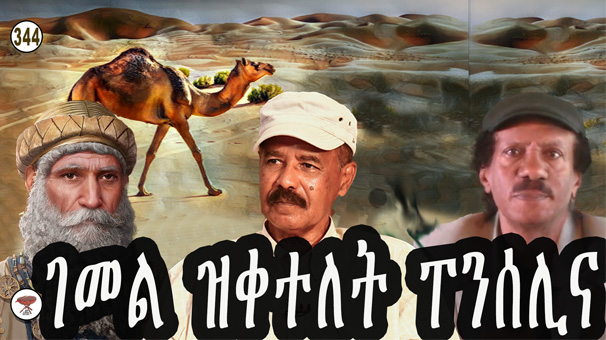
Penicillin Overdose Killed the Camel
Dr. Abiy Ahmed keeps me thinking these days, though not in the way I wanted to. During the struggle era, when there were not enough qualified doctors, dressers and nurses became doctors by default. Their kit was modest: a few vials of penicillin for wounds and infections, chloroquine for malaria, and vitamin K and blood
-
Ethiopia’s Double Standard: Talking Peace on the Nile, Hinting Force on the Red Sea
Assab is not just a port—it’s where Eritrea’s national story began. Calls for Eritrea to cede it ignore history, sovereignty, and the hard-won price of independence. Ethiopia champions international law on the Nile but risks undermining its credibility with threats over the Red Sea. True leadership requires consistency. Eritrea’s sovereignty over Assab is non-negotiable. Ethiopia…
-
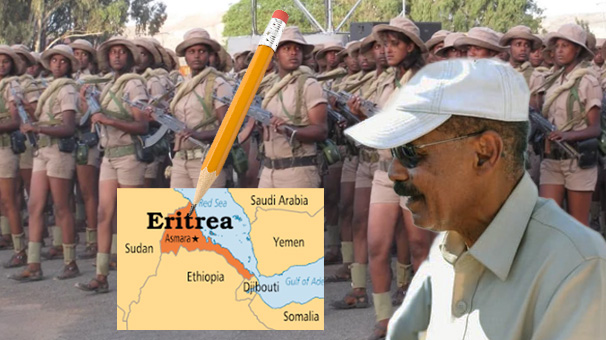
The Eritrean Regime and Its Neighbors
On May 24, 1991, Eritreans achieved their long-sought independence, formally recognized on May 24, 1993. Yet, true freedom remained elusive. The organization that became the ruling government legally solidified its hold—not through popular consent, but through brute force, injustice, and external alliances and considerations. Those early days were euphoric; few foresaw the wars and displacements
-

The UAE and the Horn of Africa – A Swirl of Interests and Alliances
Last time I said I would cover the UAE… Here it is. Now, this isn’t a comprehensive history. It’s a sketch—basic pointers you can expand on. But it’s important to know where you stand and what circles surround you. People are born into families that grow into clans, tribes, regions, and nations. Let’s focus on
-

Gaza Asab: A Peace to Start More Wars
“Ports are traditionally built to host ships that encourage trade. But Abiy envisions a port to launch his navy and battleships. Abiy Ahmed’s maneuvers in the Horn mirror the tragic ambitions of old empires… poised to repeat history.”
-

Hail Ethiopia, Hail Peace!
“Abiy’s provocative declaration has now become a rallying cry for some Ethiopian extremists.” “No claimed ancient bloodline can legitimize ownership—leaving aside political decisions.” “You shall not covet the Eritrean Red Sea.”
-

Negarit: 325: Is’t Time for Another Cyclical War in the Horn of Africa?
A candid look at the unfolding chaos in the Horn of Africa. This video dives into Ethiopia’s economic collapse, Abiy Ahmed’s war ambitions, the fractured Tigray and Amhara fronts, and Eritrea’s quiet but critical role in the region’s future. From myths to IMF loans, from scattered flour to baked revenge—this is a raw political chronicle…
-

Aferkebu Bun Dereja – Stop the Empire
In Eritrean tradition, coffee is served in three rounds—Awel, Dereja, and Bereka. This is Aferkebu Bun Dereja, the second round in a conversation about empire, exile, and the ongoing silencing of Eritrean voices. We explore how authoritarian power survives in modern disguise, how dissent is criminalized, and why Eritrea today is flying on autopilot—with no…
-

Negarit 308: The Ethiopian Red Sea Craze
Over a week ago, I started to record an episode that I didn’t finish. This is what I prepared: For the last five or six months, I have been suffering from a nasty papilloma growth in my nostril. Tomorrow, I will lie on an operation table to get rid of it. Those of you who
-
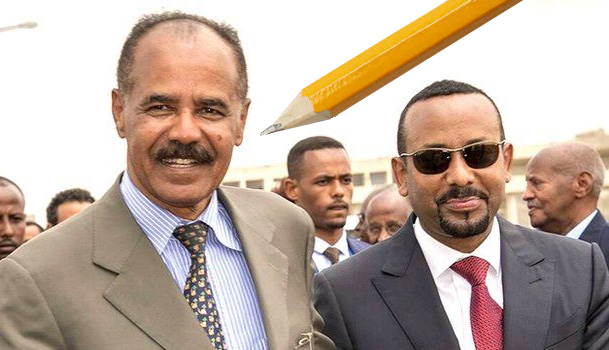
Isaias and Abiy: The Fallout
Often times, news surfaces only to be quickly subdued and forgotten, though it occasionally reemerges in surprising ways. Below is a brief list of key events: After the liberation of Massawa in 1990, Isaias returned from London where he attended a meeting between the TPLF and EPLF to discuss the future of the two countries.
-

A Corporal Warned Eritrea!
In 2021, Negarit 147, I raised the issue of SFO Safer, an oil tanker that was stranded across the Hodeida, a Yemeni port on the Red Sea since 2015. At the time, it carried over a million barrels of oil. SFO Safer used as a storage tank for Yemeni oil that was piped from the
-
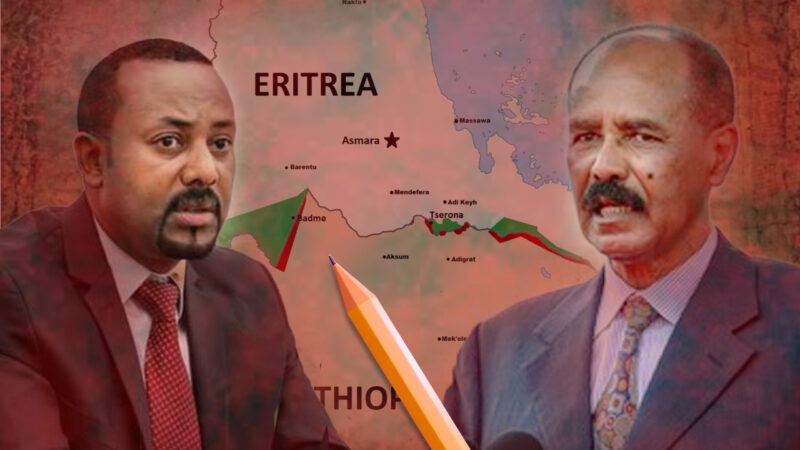
Will they make peace?
Culturally, Abyssinia still clings to its archaic, arguably primitive, mindset. Attempts at modernization have not yielded the needed results. From early on, the developed West has portrayed the nation as a Christian island amidst a Muslim sea. But the unlimited support and goodwill the developed West provided didn’t help much. Since the Middle Ages, the