
Tag: authoritarianism
-
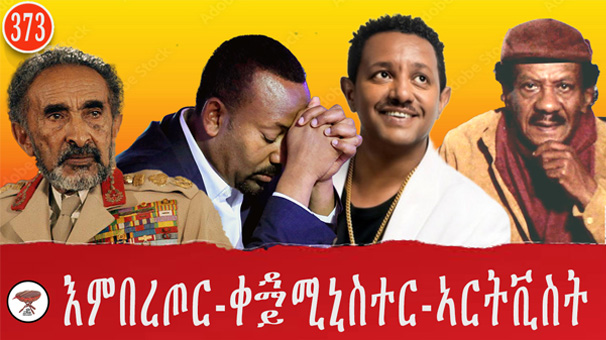
PM Abiy, Teddy Afro, and the Politics of Art
For the past few days, Teddy Afro’s new album has drawn wide attention. A friend told me its lyrics have irritated Prime Minister Abiy Ahmed’s government and sent me a clip of Abiy lecturing parliament about the difference between artists and activists. That pairing—music and political instruction—raises a deeper question: can art ever be separated
-
The Anatomy of State Failure in Eritrea
I. The Origins of Authority States do not fail in a single dramatic moment. They unravel slowly, beginning in the quiet spaces where no one imagines politics is taking place. The earliest fractures appear not in ministries or parliaments but in the daily negotiations of ordinary people. A fisherman trading his morning’s catch for a
-
The Elephant in the Room
I. The Meteor We Pretend Fell From the Sky There is a comforting story circulating in Eritrean political discourse – a story repeated so often, and with such ritualistic conviction, that it has become less an argument than a reflex. It tells us that the dictatorship is an alien force, a meteor that crashed into
-
OUR NATIONAL UNITY: Why Eritrea’s Political Imagination Fails Reality
I. The Illusion We Keep Rehearsing In recent weeks, I have been reading a series of essays on awate.on-forge.com – thoughtful pieces by Semere Habtemariam and Saleh Ghadi, attempting to stitch together a moral vision for Eritrea’s political future. They speak of unity, sacrifice, institutional maturity, historical awareness, and the enduring hope that principled action
-

The Forgotten Blueprint: How Eritrea’s 2001 Party Proclamation Could Rebuild a Nation
Eritrea’s political crisis did not emerge from a vacuum. It is the cumulative product of abandoned institutions, unimplemented laws, and a governing elite that systematically dismantled even the limited frameworks it once claimed to uphold. I use the term elite loosely here, for in the Eritrean context it connotes power without the accompanying attributes of
-
Trust Over Terror: Unity Built on a Minimum Agenda
Accra, Ghana. The very air here reminds me of what could have been for Eritrea. In the early 1990s, two nations stood at a crossroads. Ghana chose democracy, and today it stands as West Africa’s most stable and consolidated democracy. Eritrea, tragically, chose tyranny and has become a cautionary tale of what is broken in
-
The Eritrean Opposition Must Renounce Violence — Or Remain Irrelevant
The Eritrean opposition in the diaspora faces a credibility crisis so deep that it has become politically paralyzed by it. For more than three decades, it has positioned itself as the alternative to Isaias Afwerki’s rule. Yet inside Eritrea, even citizens who are profoundly dissatisfied with the government remain unconvinced that an opposition‑led transition would
-
Eritrea’s Opposition Has Run Out of Excuses
For more than three decades, Eritrea’s diaspora opposition has lived in a political waiting room—issuing statements, forming committees, dissolving committees, and then repeating the cycle with new names and old habits. The pattern has become so predictable that it no longer shocks anyone. Meanwhile, the regime in Asmera has ruled with total impunity: no constitution,
-
The Echoes of Stagnation: Reclaiming Eritrea’s Future
Through Internal Reckoning and Diaspora Strategy Unity has long eluded Eritreans. The word is invoked so frequently—and so casually—that it has lost much of its moral and political gravity. Yet its overuse does not diminish its necessity. Our repeated failure to achieve unity does not render it obsolete; it simply reveals that our methods have
-
Why the PFDJ Is Afraid of Us: The Strategic Threat of Nationalist Unity
The ruling People’s Front for Democracy and Justice (PFDJ) has not endured through popular consent. It has survived through an engineered system of fear, fragmentation, and narrative domination. Its silence toward nationalist movements is not indifference—it is apprehension. Unified, principled nationalists threaten the regime on every front: politically, strategically, philosophically, and historically. Unity as Memory—and
-
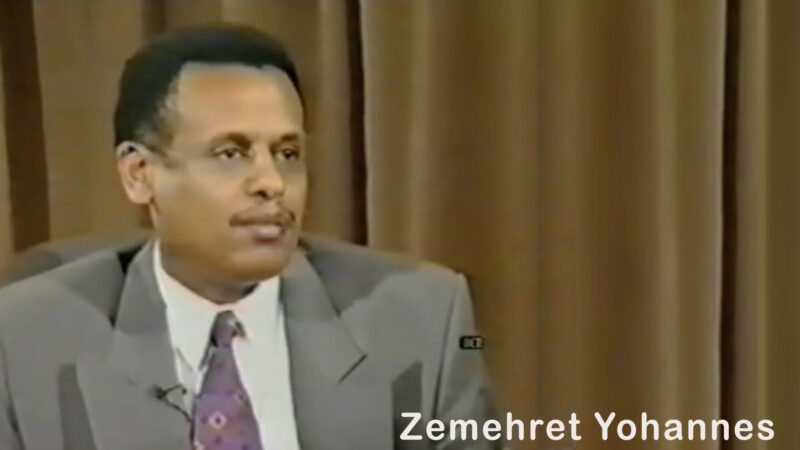
Zemihret Yohannes: A Revolutionary Legacy in Eclipse
“Once reckless in the face of danger, Zemihret became a docile servant of power—how a roaring lion, at last, learns to purr.”
-
Eritrea at Year’s End: Between Endurance and Exhaustion
As another year closes—the thirty‑fourth since independence—Eritrea stands as a nation defined by contradiction. It is a country that endured colonial rule, international machinations, a short‑lived annexation disguised as a “UN‑supervised federation,” Cold War rivalries, a brutal thirty‑year liberation struggle, a devastating border war, and repeated regional upheavals, yet still struggles to define peace on
-
When Liberation Becomes a Cage: Eritrea’s Unlearned Lessons
Eritrea’s tragic trajectory—after one of the most heroic and costly struggles for independence in modern African history—remains one of the continent’s most heartbreaking stories. By 1991, when Eritrea finally achieved freedom, the lessons of post‑colonial governance were no longer abstract. They had unfolded across Africa and the Global South in full view. Yet, despite these
-
Power, Image, and Machiavellian Survival (7)
Giants and Lilliputians of the HOA: Power, Image, and Machiavellian Survival Part Seven Introduction The central argument of this essay is simple: the Horn of Africa’s instability has never been caused by its diversity, but by leaders who repeatedly manipulate that diversity for political survival. Across Eritrea, Ethiopia, Sudan, Somalia, and Djibouti, rulers have taken
-
Emperor Haile Selassie and President Isaias Afwerki – Part Six
Giants and Lilliputians: Power, Image, and Machiavellian Survival Emperor Haile Selassie and President Isaias Afwerki – Part Six 1 — Introduction The Two Propaganda Campaigns The Eritrean Liberation Front (ELF) became the target of a sustained campaign of political defamation—first from Emperor Haile Selassie’s Ethiopia, and later, far more powerfully, from the Isaias-led People’s Liberation
-
Giants and Lilliputians: Haile Selassie and President Isaias Afwerki (Part 2)
Power, Image, and Machiavellian Survival: The Body as a Mirror of Power To understand Isaias Afwerki’s psychology, one must first confront the contradiction written across his body. His appearance—spare, stiff, and strangely careless—betrayed none of the humility expected of a revolutionary. Nor did it reflect the ethos of the Tegadelti, whose plainness was once a
-
Power, Image, and Machiavellian Survival: Emperor Haile Selassie and President Isaias Afwerki
Two Towering Figures–Giants and Lilliputians (Part 1) Across the sorrowful and entangled histories of Ethiopia and Eritrea, two figures loom with spectral intensity: Emperor Haile Selassie I and President Isaias Afwerki. Their shadows stretch across generations, ideologies, and geopolitical fault lines—each a master of power, each a paradox incarnate. At the outset of their reigns,
-
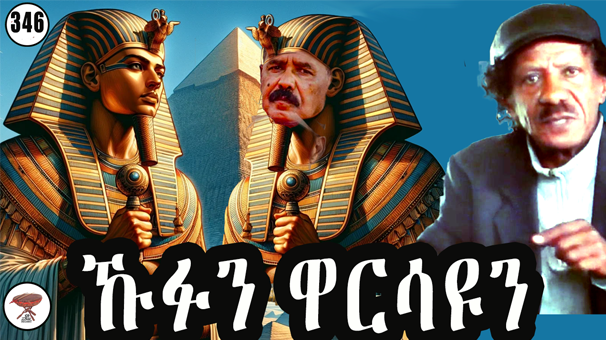
The Faucet Festival
A satirical take on Isaias Afwerki’s mysterious faucet sculpture, comparing it to Pharaoh Khufu’s pyramid and the Syrian comedy “Faucet Festival” to highlight Eritrea’s forced labor and cult of leadership.
-
Ts’əmdi and Ts’imdo: Joined for Utility, Not Unity
In the semi-fertile soil of Tigrinya, the words ጽምዲ (Ts’əmdi) and ጽምዶ (Ts’imdo) bloom with layered meaning—practical, poetic, and political. Both conjure the image of two entities alloyed together, yet their applications diverge across the rhythms of life. ጽምዲ, as in ጽምዲ ብዕራይ, refers to two oxen yoked to plough a field—a necessity for poor
-
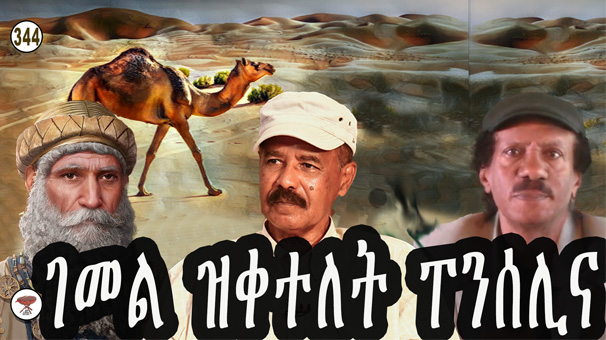
Penicillin Overdose Killed the Camel
Dr. Abiy Ahmed keeps me thinking these days, though not in the way I wanted to. During the struggle era, when there were not enough qualified doctors, dressers and nurses became doctors by default. Their kit was modest: a few vials of penicillin for wounds and infections, chloroquine for malaria, and vitamin K and blood