
Tag: EPLF
-

The Wound and the Cure: How Nehnan Elamanan Damaged Eritrea’s National Unity — and What a Truthful Manifesto Could Have Built Instead
Introduction: The Shadow of a Document There are moments in a nation’s history when a single document bends the arc of its political culture. Sometimes it elevates; sometimes it distorts. Nehnan Elamanan belongs to the latter category. Written in 1971, it did more than justify a factional split. It rewrote the moral grammar of the
-
The Day After: Preparing Eritrea for its Most Dangerous Transition
There comes a moment in the life of every nation when denial becomes a luxury it can no longer afford. Eritrea is approaching such a moment. Tick‑tock. The eventual death of President Isaias Afwerki—whether tomorrow or years from now—is not a political prediction but an unavoidable biological certainty. What follows will determine whether Eritrea survives
-
The Forgotten Blueprint: How Eritrea’s 2001 Party Proclamation Could Rebuild a Nation
Eritrea’s political crisis did not emerge from a vacuum. It is the cumulative product of abandoned institutions, unimplemented laws, and a governing elite that systematically dismantled even the limited frameworks it once claimed to uphold. I use the term elite loosely here, for in the Eritrean context it connotes power without the accompanying attributes of
-
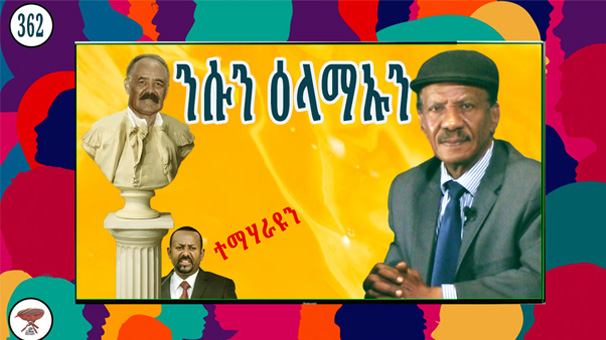
He and his objectives
The first decade of the Eritrean struggle for independence, which began on September 1, 1961, was a period of experimentation and growing pains. By the late 1960s, however, a convergence of factors—the military setbacks of the field, the draining of regional Arab support following the Six-Day War, and the reach of sustained Ethiopian propaganda—pushed the
-
Why the PFDJ Is Afraid of Us: The Strategic Threat of Nationalist Unity
The ruling People’s Front for Democracy and Justice (PFDJ) has not endured through popular consent. It has survived through an engineered system of fear, fragmentation, and narrative domination. Its silence toward nationalist movements is not indifference—it is apprehension. Unified, principled nationalists threaten the regime on every front: politically, strategically, philosophically, and historically. Unity as Memory—and
-
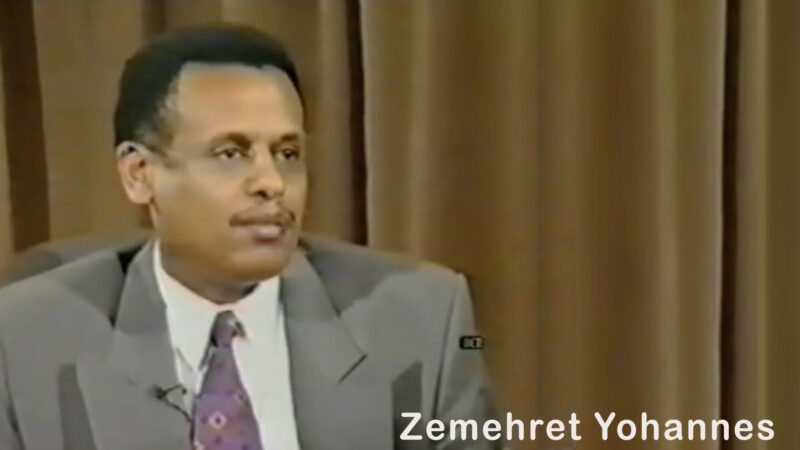
Zemihret Yohannes: A Revolutionary Legacy in Eclipse
“Once reckless in the face of danger, Zemihret became a docile servant of power—how a roaring lion, at last, learns to purr.”
-
When Liberation Becomes a Cage: Eritrea’s Unlearned Lessons
Eritrea’s tragic trajectory—after one of the most heroic and costly struggles for independence in modern African history—remains one of the continent’s most heartbreaking stories. By 1991, when Eritrea finally achieved freedom, the lessons of post‑colonial governance were no longer abstract. They had unfolded across Africa and the Global South in full view. Yet, despite these
-
Power, Image, and Machiavellian Survival (7)
Giants and Lilliputians of the HOA: Power, Image, and Machiavellian Survival Part Seven Introduction The central argument of this essay is simple: the Horn of Africa’s instability has never been caused by its diversity, but by leaders who repeatedly manipulate that diversity for political survival. Across Eritrea, Ethiopia, Sudan, Somalia, and Djibouti, rulers have taken
-
Emperor Haile Selassie and President Isaias Afwerki – Part Six
Giants and Lilliputians: Power, Image, and Machiavellian Survival Emperor Haile Selassie and President Isaias Afwerki – Part Six 1 — Introduction The Two Propaganda Campaigns The Eritrean Liberation Front (ELF) became the target of a sustained campaign of political defamation—first from Emperor Haile Selassie’s Ethiopia, and later, far more powerfully, from the Isaias-led People’s Liberation
-
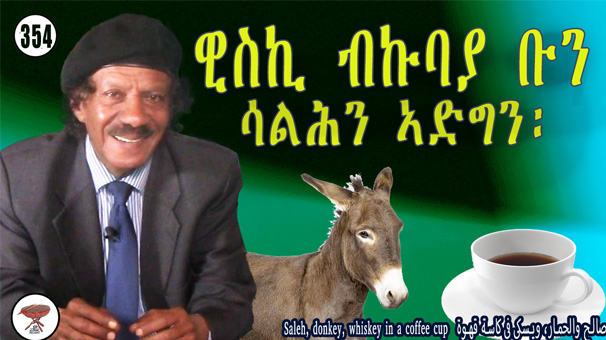
Saleh, a Donkey, and Whiskey in Coffee Cups
Today’s episode concludes the mini-series spanning episodes 349 to 354. I will place them all in one playlist for easy reference. And as the adage goes, sebaay klte neow nejew kbl mote—a person must finish what he starts. There are many topics awaiting us, especially the constant poking from Abiy Ahmed and his flamboyant but empty
-
Giants and Lilliputians: Power, Image, and Machiavellian Survival (IV)
Giants and Lilliputians: Power, Image, and Machiavellian Survival Emperor Haile Selassie and President Isaias Afwerki (Part IV) The Seeds of Division within the Eritrean Liberation Front (ELF) Imperial Mythology and the Weaponization of Religion To understand the fragmentation of the Eritrean Liberation Front (ELF), the eventual triumph of the Eritrean People’s Liberation Front (EPLF), and
-
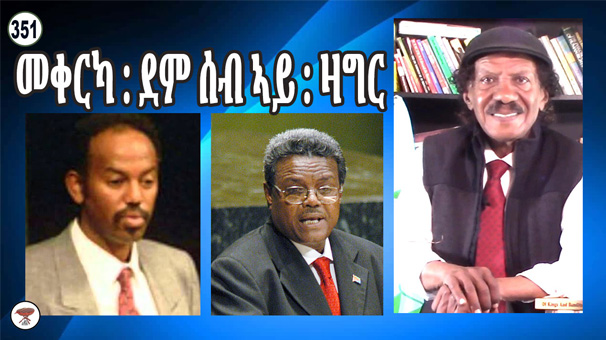
Meqerka, Dem Sebaay, Zagir
In 1967, Israel and the Arabs (basically Egypt) fought the Six-Day War; Israel overran Egyptian territories and took control of the Sinai Peninsula and effectively closed the Suez Canal. Haim Bar-Lev, the Israeli chief of staff, designed a 120 km long ditch and about 20 meters high dirt fortifications. Along the Bar Lev Line, Israel
-
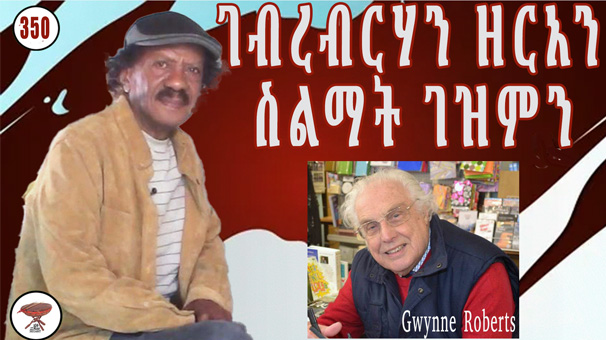
Gebreberhan Zere and Dowry Jewelry
The late Abdulkadir Ramadan and Tesfay Tekle were conducting TekhliT (dagmay srrE) around Himberti when Tesfay caught my little trick to be assigned to Kebesa. His sharp warning left no room for negotiation. Worse still, my stay in Kebessa was cut short by my dear friend, the late Gebreberhan Zere, who was kidnapped and presumably
-
The Tenth Anniversary of the ELF Reunion and Reflection
Honoring the Past, Inspiring the Future Dallas, Texas | October 3–5, 2025 In a hall radiant with camaraderie, sibling affection, and the joy of long-awaited embraces, the tenth anniversary of the Eritrean Liberation Front (ELF) Reunion and Reflection unfolded under the theme “Honoring the Past and Inspiring the Future.” Held in Dallas, Texas, the gathering
-
Ts’əmdi and Ts’imdo: Joined for Utility, Not Unity
In the semi-fertile soil of Tigrinya, the words ጽምዲ (Ts’əmdi) and ጽምዶ (Ts’imdo) bloom with layered meaning—practical, poetic, and political. Both conjure the image of two entities alloyed together, yet their applications diverge across the rhythms of life. ጽምዲ, as in ጽምዲ ብዕራይ, refers to two oxen yoked to plough a field—a necessity for poor
-
Sept. 18, 2001: The Day Memory Was Criminalized
Eritrea’s Day of Infamy: The Day Liberty Died Some days do not merely pass into history—they haunt it. September 18, 2001, is one such day: a wound unhealed, a silence unbroken, a betrayal unforgotten. It is Eritrea’s Day of Infamy—the day memory itself was criminalized. It is the day the regime drained the oxygen of
-
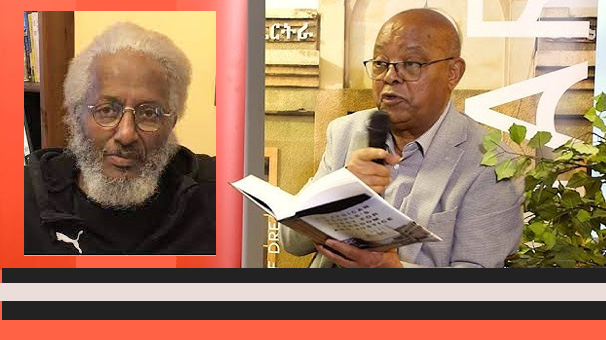
More Reflections on Alemseged Tesfai’s Epilogue
This is not a proper article but rather a collection of thoughts … I started off well, but I was too weak to continue. I was very surprised when I watched a video of a group of PFDJ supporters—the Eritrean regime’s party members—welcoming Alemseged in the embassy hall in London, clapping rhythmically in a rising
-
Why Alemseged, Why? In Context
“History is not the past. It is the present. We carry our history with us. We are our history.” James Baldwin Every Eritrean family carries an unwritten epilogue. A grandfather’s half-told story, a photograph hidden in a drawer, a grave unmarked but remembered by the path to it. These fragments form our private archives. They
-
Eritrea’s Missing Architects: The Intellectual Void Behind a Crippled Nation-Building
Eritrea’s liberation struggle stands as one of the most extraordinary military victories of the modern era. In 1991, the EPLF decisively defeated Ethiopian forces and freed the country. Yet instead of declaring independence immediately, it opted for a UN-supervised referendum in 1993—an exercise that yielded a predictable 99.83% result. Contrast this with the American Revolution,
-
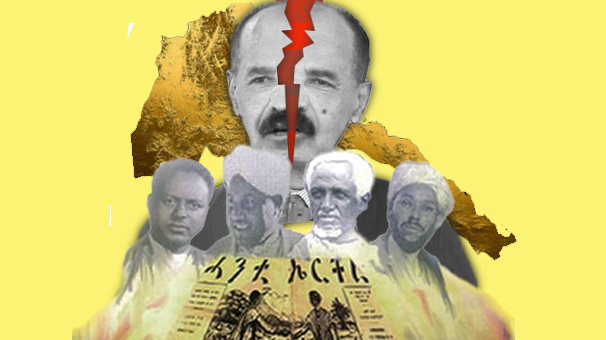
Eritrea’s Unanswered Question: 34 Years of Isaias Afwerki’s Rule
Eritrea’s Unanswered Question: What 34 Years of Isaias Afwerki’s Rule Reveal About Sovereignty and Survival In the beginning was the question—etched into the soul of the nation itself: Can Eritrea survive—and thrive—as a truly sovereign, independent state? For decades, global powers insisted we could not. Italy once tried to sell Eritrea to Belgium, citing economic