Tag: Eritrean Diaspora
-
The Anatomy of State Failure in Eritrea
I. The Origins of Authority States do not fail in a single dramatic moment. They unravel slowly, beginning in the quiet spaces where no one imagines politics is taking place. The earliest fractures appear not in ministries or parliaments but in the daily negotiations of ordinary people. A fisherman trading his morning’s catch for a
-
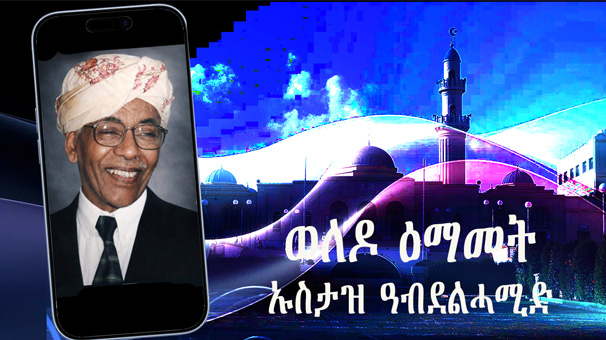
Ustaz AbdulHamid: Among the Few Left from the Umma Generation
It was Mendefera, on a January morning in 1929. The wife was expecting; soon, the child refused to remain in the womb and came into the world. An elderly midwife was there to help. The baby looked healthy. She was glad because her prediction had come true—it was a boy. Smiling, she cupped her hands
-
The Day After: Preparing Eritrea for its Most Dangerous Transition
There comes a moment in the life of every nation when denial becomes a luxury it can no longer afford. Eritrea is approaching such a moment. Tick‑tock. The eventual death of President Isaias Afwerki—whether tomorrow or years from now—is not a political prediction but an unavoidable biological certainty. What follows will determine whether Eritrea survives
-
OUR NATIONAL UNITY: Why Eritrea’s Political Imagination Fails Reality
I. The Illusion We Keep Rehearsing In recent weeks, I have been reading a series of essays on awate.on-forge.com – thoughtful pieces by Semere Habtemariam and Saleh Ghadi, attempting to stitch together a moral vision for Eritrea’s political future. They speak of unity, sacrifice, institutional maturity, historical awareness, and the enduring hope that principled action
-
The Limits of Rupture, the Promise of Reform: Rethinking Eritrea’s Transition
When a nation emerges from prolonged authoritarian rule, it eventually confronts a foundational question: do we discard everything associated with the old order and begin again from scratch, or do we recover what was valuable, repair what was broken, and build forward from there? In Eritrea’s case, that dilemma can be framed as Total Reset
-
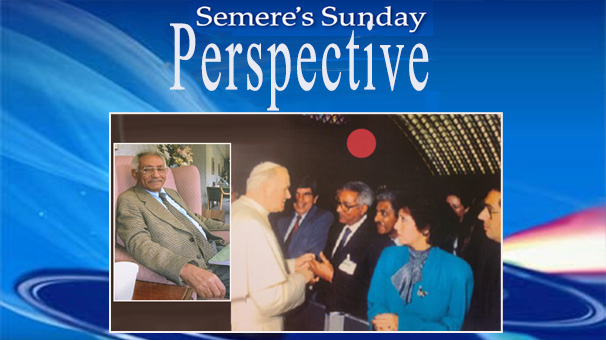
The Unsung Heroes of Our National Unity
There is a Tigrinya saying I learned from my mother: “One who does not do small deeds should not dream of doing bigger things—ንእሽተይ ጽቡቕ ዘይገብር፡ ዓቢ ክገብር ኢሉ ኣይሕሰብ.” In truth, it is the small, consistent acts of goodness that shape our character and ultimately determine the destiny of a people. We are, after
-
The Normalization of Self-Censorship in Eritrea
When self-censorship becomes pervasive, a society forfeits more than the right to open dissent; it forfeits the very conditions that make common knowledge possible – the shared awareness of what others know, think, and believe. In such an atmosphere, individuals can no longer reliably gauge the convictions of their peers or distinguish private doubt from
-
National Unity Cannot Be Rebuilt One Community at a Time
Eritreans everywhere recognize the same painful truth: our nation is in deep crisis. Political paralysis, social fragmentation, and the mass flight of our youth have become defining features of our national condition. These burdens do not belong to one region or one religion. They belong to an entire people. My brother, the respected commentator Ismail
-
The Echoes of Stagnation: Reclaiming Eritrea’s Future
Through Internal Reckoning and Diaspora Strategy Unity has long eluded Eritreans. The word is invoked so frequently—and so casually—that it has lost much of its moral and political gravity. Yet its overuse does not diminish its necessity. Our repeated failure to achieve unity does not render it obsolete; it simply reveals that our methods have
-
Why the PFDJ Is Afraid of Us: The Strategic Threat of Nationalist Unity
The ruling People’s Front for Democracy and Justice (PFDJ) has not endured through popular consent. It has survived through an engineered system of fear, fragmentation, and narrative domination. Its silence toward nationalist movements is not indifference—it is apprehension. Unified, principled nationalists threaten the regime on every front: politically, strategically, philosophically, and historically. Unity as Memory—and
-
Eritrea at Year’s End: Between Endurance and Exhaustion
As another year closes—the thirty‑fourth since independence—Eritrea stands as a nation defined by contradiction. It is a country that endured colonial rule, international machinations, a short‑lived annexation disguised as a “UN‑supervised federation,” Cold War rivalries, a brutal thirty‑year liberation struggle, a devastating border war, and repeated regional upheavals, yet still struggles to define peace on
-
Emperor Haile Selassie and President Isaias Afwerki – Part Six
Giants and Lilliputians: Power, Image, and Machiavellian Survival Emperor Haile Selassie and President Isaias Afwerki – Part Six 1 — Introduction The Two Propaganda Campaigns The Eritrean Liberation Front (ELF) became the target of a sustained campaign of political defamation—first from Emperor Haile Selassie’s Ethiopia, and later, far more powerfully, from the Isaias-led People’s Liberation
-
The Tenth Anniversary of the ELF Reunion and Reflection
Honoring the Past, Inspiring the Future Dallas, Texas | October 3–5, 2025 In a hall radiant with camaraderie, sibling affection, and the joy of long-awaited embraces, the tenth anniversary of the Eritrean Liberation Front (ELF) Reunion and Reflection unfolded under the theme “Honoring the Past and Inspiring the Future.” Held in Dallas, Texas, the gathering
-
A Return of Sorts to Religion
In a much-publicized recent religious event at the Anda Mariam Tewahdo church, many of the top Eritrean officials were seen at the forefront, solemnly bowing and kissing the cross. In principle, such an occurrence shouldn’t be unusual in a country with a mix of Christians and Muslims. Adherents to faith, regardless of their social status,
-
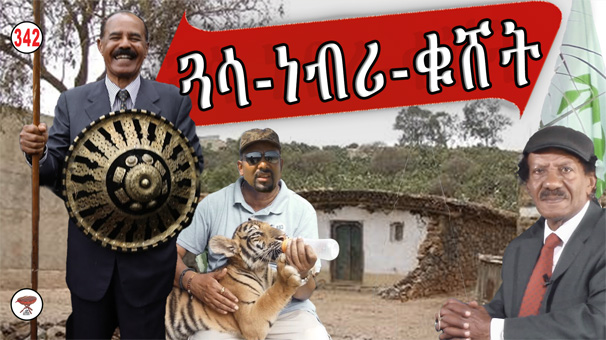
A Shepherd, A Tiger Cub, and A Village
A shepherd boy, bored while tending his goats on the edge of a village, cried, “HELP! A tiger is attacking me!” The villagers rushed, swords in hand, to save him—only to be mocked when he admitted it was a joke. Angrily, they returned home. He repeated this again and again. But the fourth time, when
-
In Conversation with History
The history of Eritrea cannot be reduced to isolated dates that mark the fall of emperors or the clashes of factions. It must be understood as a continuum in which missed opportunities, fratricidal tragedies, and enduring symbols converge into lessons still awaiting full reckoning. This essay considers three pivotal currents: the slow death of the
-
Eritrea’s Unanswered Question: 34 Years of Isaias Afwerki’s Rule
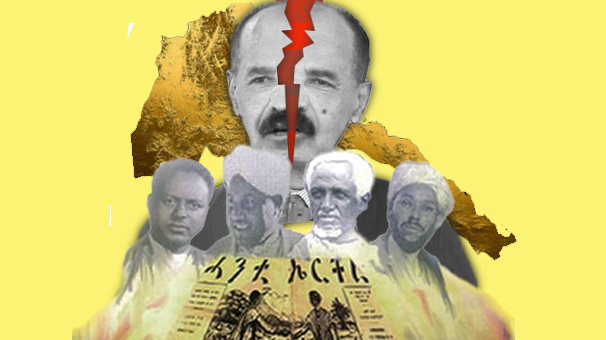
Eritrea’s Unanswered Question: What 34 Years of Isaias Afwerki’s Rule Reveal About Sovereignty and Survival In the beginning was the question—etched into the soul of the nation itself: Can Eritrea survive—and thrive—as a truly sovereign, independent state? For decades, global powers insisted we could not. Italy once tried to sell Eritrea to Belgium, citing economic
-
Alemseged Tesfai: Is that all what you are?
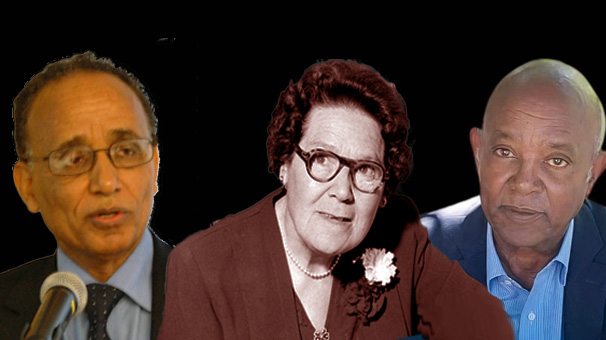
Debunking Ethiopia’s memos of late 1940s claiming ‘the return of Eritrea to its motherland,’ Margery Perham, a British historian, wrote in 1948 that every sentence in those memos “cried for comment and correction.” That expression came to my mind this week while reading Almseged Tesfai’s five-page Epilogue for the translation of his worthy three volumes
-
Delusion and Confusion: Awet NeHafash or Awet Nwedi Afom
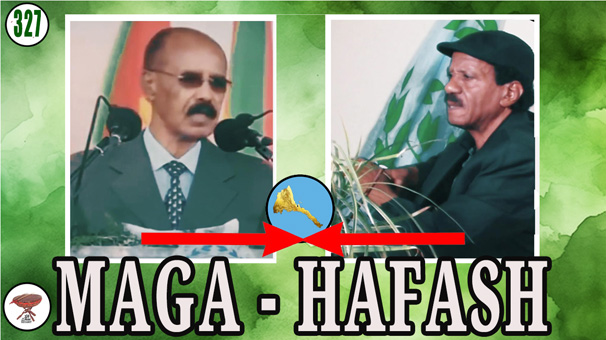
Isaias Afwerki vs. Reality: A Speech Drenched in Delusion. That was illustrated in his last public appearance to deliver the Independence Day speech. As usual, it was a speech drenched in delusion. Listening to Isaias Afwerki’s speeches should be classified as punishment. They are stale, tedious, and laced with bitter pronouncements that parch the tongue.