
Tag: Eritrean Politics
-
Protocol, Power, Policy, and the Urgent Need for Institutions
I. A Visit That Reveals More Than It Intended Eritreans have long relied on Awate’s Regional News link to follow developments across the Horn of Africa, a region where every diplomatic gesture carries weight. This week, one story in particular demanded attention: the visit of Eritrea’s minister of trade and industry, Nasreddin Saleh, accompanied by
-
The Day After: Preparing Eritrea for its Most Dangerous Transition
There comes a moment in the life of every nation when denial becomes a luxury it can no longer afford. Eritrea is approaching such a moment. Tick‑tock. The eventual death of President Isaias Afwerki—whether tomorrow or years from now—is not a political prediction but an unavoidable biological certainty. What follows will determine whether Eritrea survives
-
Endless Cycle Splits, Mergers, and Rebranding in the Eritrean Opposition
Fragmentation Without Disappearance: The Endless Cycle of Splits, Mergers, and Rebranding in the Eritrean Opposition In the middle of last year, I committed to writing about Eritrean national unity—both in its broad historical sense and within the specific context of the diaspora‑based opposition. As I continue gathering information on the latter, I readily acknowledge that
-
Habrengaqa: The Forgotten Line That Almost Divided Eritrea
Many Eritreans do not know the village of Habrengaqa, halfway on the Keren–Asmara road, at the top of the escarpment—a geographical divide between the Eritrean lowlands and highlands. But that is not the source of its fame. Rather, during the turbulent years of the 1940s, the British Military Administration (BMA) of Eritrea had a devilish
-
The Normalization of Self-Censorship in Eritrea
When self-censorship becomes pervasive, a society forfeits more than the right to open dissent; it forfeits the very conditions that make common knowledge possible – the shared awareness of what others know, think, and believe. In such an atmosphere, individuals can no longer reliably gauge the convictions of their peers or distinguish private doubt from
-
National Unity Cannot Be Rebuilt One Community at a Time
Eritreans everywhere recognize the same painful truth: our nation is in deep crisis. Political paralysis, social fragmentation, and the mass flight of our youth have become defining features of our national condition. These burdens do not belong to one region or one religion. They belong to an entire people. My brother, the respected commentator Ismail
-
Nehnan Elamanan: The Mother of the PFDJ
Isaias Afwerki’s Nehnan Elamanan manifesto transformed internal grievances into ideological justification for political separation and eventual monopoly power.
-
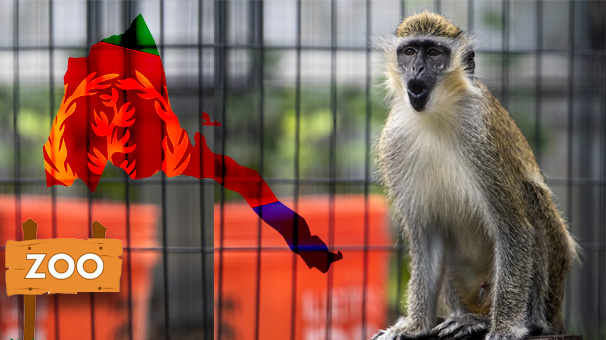
The Three-Nakfa Gaze: When Poverty Is Put on Display
“Once deprivation is renamed ‘culture,’ it becomes protected from criticism. What appears as heritage can quietly function as camouflage, transforming material constraint into identity and turning urgency for change into an act that looks like disrespect. When citizens encounter one another primarily as curated displays, the relationship shifts from shared political belonging to observation, and…
-
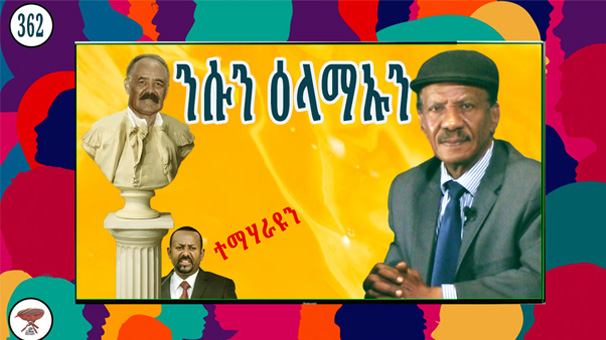
He and his objectives
The first decade of the Eritrean struggle for independence, which began on September 1, 1961, was a period of experimentation and growing pains. By the late 1960s, however, a convergence of factors—the military setbacks of the field, the draining of regional Arab support following the Six-Day War, and the reach of sustained Ethiopian propaganda—pushed the
-
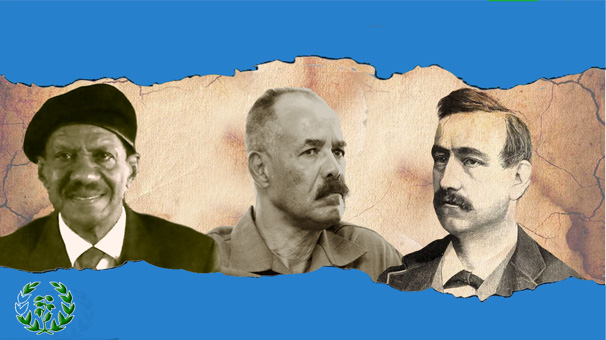
From Martini to Isaias Afwerki
This is edited and contextualized as a reflective opinion essay inspired by the book “Through the Eyes of a Colonizer” by Renato Paoli and translated by Ruth Tewelde There is something I keep running into whenever I read colonial-era books, and it never fails to surprise me. It’s the numbers. At the turn of the
-
The Echoes of Stagnation: Reclaiming Eritrea’s Future
Through Internal Reckoning and Diaspora Strategy Unity has long eluded Eritreans. The word is invoked so frequently—and so casually—that it has lost much of its moral and political gravity. Yet its overuse does not diminish its necessity. Our repeated failure to achieve unity does not render it obsolete; it simply reveals that our methods have
-
Eritrea at Year’s End: Between Endurance and Exhaustion
As another year closes—the thirty‑fourth since independence—Eritrea stands as a nation defined by contradiction. It is a country that endured colonial rule, international machinations, a short‑lived annexation disguised as a “UN‑supervised federation,” Cold War rivalries, a brutal thirty‑year liberation struggle, a devastating border war, and repeated regional upheavals, yet still struggles to define peace on
-
When Liberation Becomes a Cage: Eritrea’s Unlearned Lessons
Eritrea’s tragic trajectory—after one of the most heroic and costly struggles for independence in modern African history—remains one of the continent’s most heartbreaking stories. By 1991, when Eritrea finally achieved freedom, the lessons of post‑colonial governance were no longer abstract. They had unfolded across Africa and the Global South in full view. Yet, despite these
-
Emperor Haile Selassie and President Isaias Afwerki – Part Six
Giants and Lilliputians: Power, Image, and Machiavellian Survival Emperor Haile Selassie and President Isaias Afwerki – Part Six 1 — Introduction The Two Propaganda Campaigns The Eritrean Liberation Front (ELF) became the target of a sustained campaign of political defamation—first from Emperor Haile Selassie’s Ethiopia, and later, far more powerfully, from the Isaias-led People’s Liberation
-
Power, Image, and Machiavellian Survival: Emperor Haile Selassie and President Isaias Afwerki
Two Towering Figures–Giants and Lilliputians (Part 1) Across the sorrowful and entangled histories of Ethiopia and Eritrea, two figures loom with spectral intensity: Emperor Haile Selassie I and President Isaias Afwerki. Their shadows stretch across generations, ideologies, and geopolitical fault lines—each a master of power, each a paradox incarnate. At the outset of their reigns,
-
A Return of Sorts to Religion
In a much-publicized recent religious event at the Anda Mariam Tewahdo church, many of the top Eritrean officials were seen at the forefront, solemnly bowing and kissing the cross. In principle, such an occurrence shouldn’t be unusual in a country with a mix of Christians and Muslims. Adherents to faith, regardless of their social status,
-
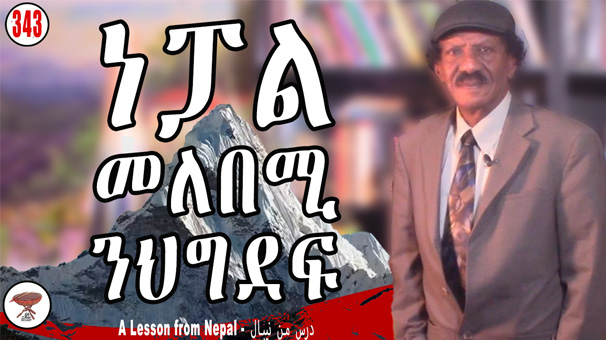
Nepal: A Lesson for the PFDJ and the Youth
Every era popularizes certain names—mainly names of rulers and prominent people of the time. Since the nineteen-forties and fifties, the name of a famous person that was often repeated in newspapers and radio bulletins has become popular; parents adopt the name for their babies. My aunt, (who is my cousin, but I called her aunt
-
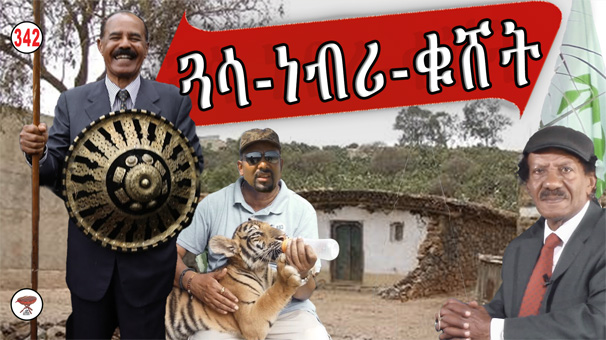
A Shepherd, A Tiger Cub, and A Village
A shepherd boy, bored while tending his goats on the edge of a village, cried, “HELP! A tiger is attacking me!” The villagers rushed, swords in hand, to save him—only to be mocked when he admitted it was a joke. Angrily, they returned home. He repeated this again and again. But the fourth time, when
-
Eritrean Opposition Group Move Towards Merger
• “This move signals a potential end to decades of fragmentation among Eritrean opposition forces.”