
Tag: Haile Selassie
-
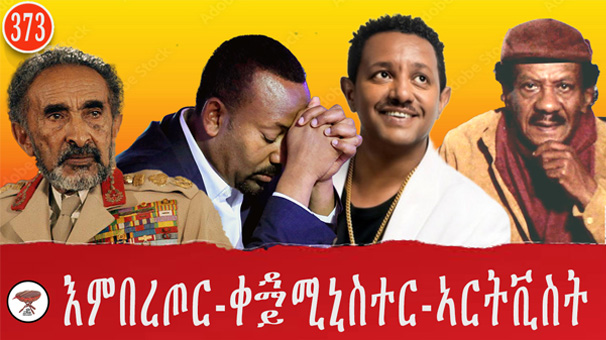
PM Abiy, Teddy Afro, and the Politics of Art
For the past few days, Teddy Afro’s new album has drawn wide attention. A friend told me its lyrics have irritated Prime Minister Abiy Ahmed’s government and sent me a clip of Abiy lecturing parliament about the difference between artists and activists. That pairing—music and political instruction—raises a deeper question: can art ever be separated
-

Power, Image, and Machiavellian Survival (7)
Giants and Lilliputians of the HOA: Power, Image, and Machiavellian Survival Part Seven Introduction The central argument of this essay is simple: the Horn of Africa’s instability has never been caused by its diversity, but by leaders who repeatedly manipulate that diversity for political survival. Across Eritrea, Ethiopia, Sudan, Somalia, and Djibouti, rulers have taken
-
Emperor Haile Selassie and President Isaias Afwerki – Part Six
Giants and Lilliputians: Power, Image, and Machiavellian Survival Emperor Haile Selassie and President Isaias Afwerki – Part Six 1 — Introduction The Two Propaganda Campaigns The Eritrean Liberation Front (ELF) became the target of a sustained campaign of political defamation—first from Emperor Haile Selassie’s Ethiopia, and later, far more powerfully, from the Isaias-led People’s Liberation
-
Giants and Lilliputians: Power, Image, and Machiavellian Survival (Part V)
Giants and Lilliputians: Power, Image, and Machiavellian Survival Beyond Emperor Haile Selassie and President Isaias AfwerkiThe centralizing dogma of empire, religion and revolutions Eritrea and Ethiopia are lands where mosque and monastery, Qur’an and Psalter, have long breathed the same air. At their deepest currents, the histories of these nations are not tales of division,
-
Giants and Lilliputians: Power, Image, and Machiavellian Survival (IV)
Giants and Lilliputians: Power, Image, and Machiavellian Survival Emperor Haile Selassie and President Isaias Afwerki (Part IV) The Seeds of Division within the Eritrean Liberation Front (ELF) Imperial Mythology and the Weaponization of Religion To understand the fragmentation of the Eritrean Liberation Front (ELF), the eventual triumph of the Eritrean People’s Liberation Front (EPLF), and
-
Giants and Lilliputians: Haile Selassie and President Isaias Afwerki (Part 2)
Power, Image, and Machiavellian Survival: The Body as a Mirror of Power To understand Isaias Afwerki’s psychology, one must first confront the contradiction written across his body. His appearance—spare, stiff, and strangely careless—betrayed none of the humility expected of a revolutionary. Nor did it reflect the ethos of the Tegadelti, whose plainness was once a
-
Power, Image, and Machiavellian Survival: Emperor Haile Selassie and President Isaias Afwerki
Two Towering Figures–Giants and Lilliputians (Part 1) Across the sorrowful and entangled histories of Ethiopia and Eritrea, two figures loom with spectral intensity: Emperor Haile Selassie I and President Isaias Afwerki. Their shadows stretch across generations, ideologies, and geopolitical fault lines—each a master of power, each a paradox incarnate. At the outset of their reigns,
-

In Conversation with History
The history of Eritrea cannot be reduced to isolated dates that mark the fall of emperors or the clashes of factions. It must be understood as a continuum in which missed opportunities, fratricidal tragedies, and enduring symbols converge into lessons still awaiting full reckoning. This essay considers three pivotal currents: the slow death of the
-
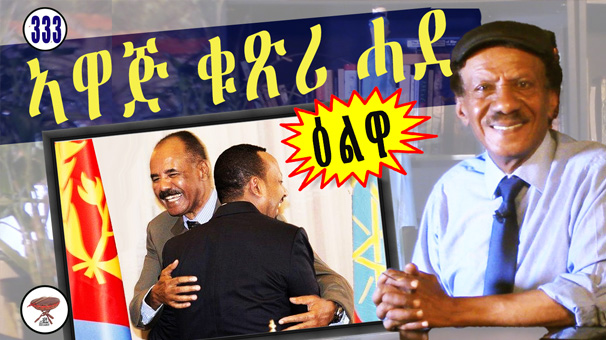
“Military Communique #1: Coup d’ Etat”
This was a common radio announcement, preceded by martial music and read in the deep voice of an officer. Immediately, fear engulfed listeners, followed by intense discussions and swirling rumors. Most people in the so-called third world instantly recognized it as a coup d’état—usually in a country they couldn’t even locate on a map. A
-
The Fiddle and the Fiddler:
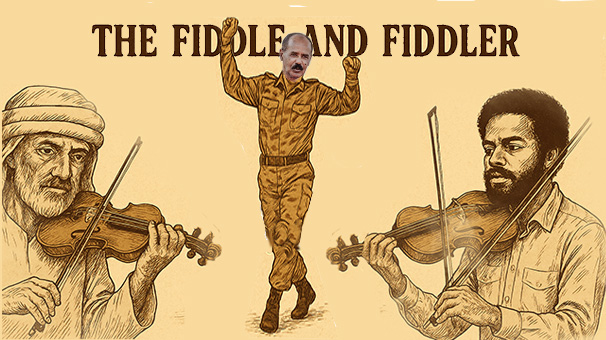
The Fiddle and the Fiddler: How the Arabs and TPLF Undermined the Eritrean Revolution The story goes: when Haile Selassie dissolved the federation and annexed Eritrea, the Eritrean people erupted in rebellion, and thus the revolution was born. The war lasted thirty years, and ultimately, the Eritreans triumphed. A compelling story. Many Eritreans dismiss the
-
Kings of Kings and Colonels
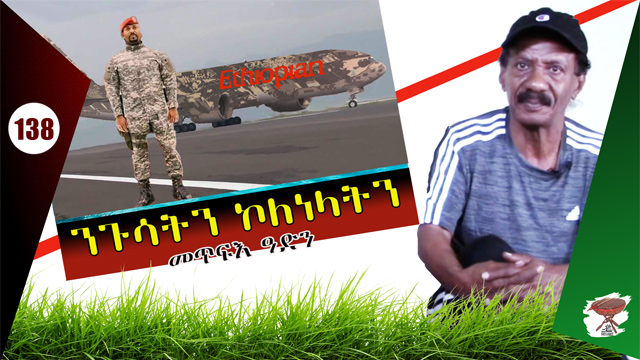
In ancient times, each locality, and later each city, had a king. One of them emerged stronger and subjugated the rest. They accepted his authority over them and submitted to his rule with varying level of autonomy. Thus, he became King of Kings, who overtime became an expansionist emperor. Some historian trace that to the
-
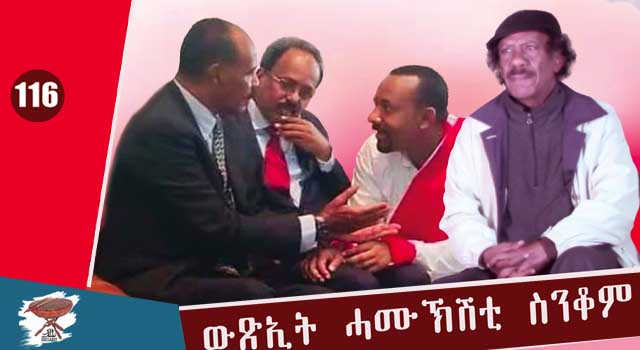
The Wicked Pact Against Tigray
How do people keep their composure despite an anger? I will start with a Tigrayan Lady whose views I really liked. Principled, to the point and very genuine. Obviously she is in pain due to the current situation in Tigrai; I would be as angrier if I was a Tigrayan. Today the people of Tigrai
-
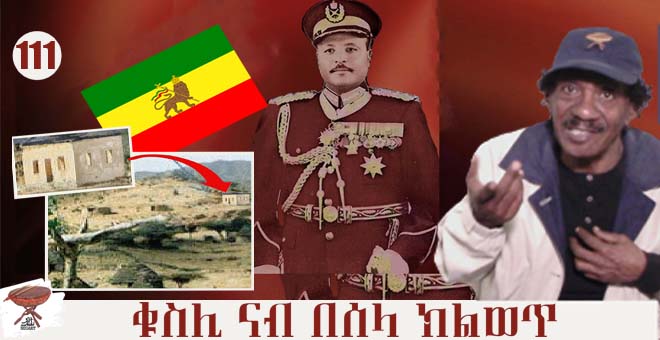
The Massacre of Ona and Besekdira: When Scars Replace Wounds
Almost all my generation carry scars on their upper arms. Scars left from the crude type of vaccinations: smallpox, Measles, typhoid, TB, Yellow fever, etc. I say crude because it was not a drop on the tangue, or a pinch with a small needle. They use huge syringe and keep emptying it on your arm.
-
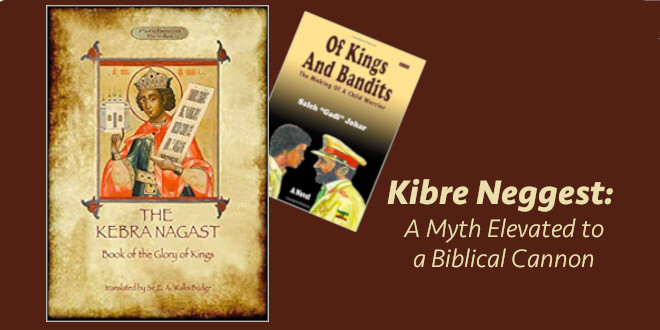
Kibre Neggest: A Myth Elevated to a Biblical Cannon
There is no piece of fiction that shaped the Abyssinian psyche the way Kibre Neggest did. A product of the 13th century, many Abyssinians accept it as an authentic narration of actual history that equates the birth of Minelik (corrupted Arabic Ibn Al Malik or Hebrew Bin Melech – מֶלֶךְ ) with the birth of Jesus Christ. The narration