
Tag: Horn of Africa
-

Protocol, Power, Policy, and the Urgent Need for Institutions
I. A Visit That Reveals More Than It Intended Eritreans have long relied on Awate’s Regional News link to follow developments across the Horn of Africa, a region where every diplomatic gesture carries weight. This week, one story in particular demanded attention: the visit of Eritrea’s minister of trade and industry, Nasreddin Saleh, accompanied by
-
OUR NATIONAL UNITY: Why Eritrea’s Political Imagination Fails Reality
I. The Illusion We Keep Rehearsing In recent weeks, I have been reading a series of essays on awate.on-forge.com – thoughtful pieces by Semere Habtemariam and Saleh Ghadi, attempting to stitch together a moral vision for Eritrea’s political future. They speak of unity, sacrifice, institutional maturity, historical awareness, and the enduring hope that principled action
-
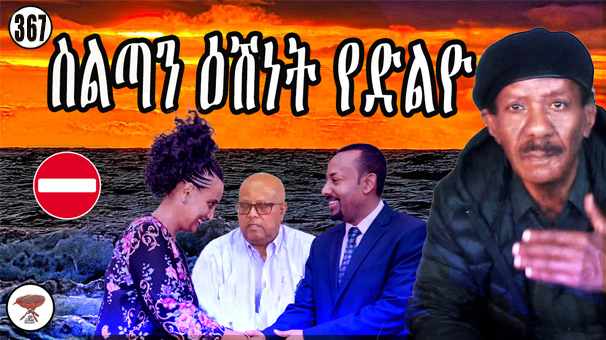
Power Needs Compliance
Every power structure requires obedience to survive. Intelligent people question authority; obedient people preserve it.
-
National Unity Cannot Be Rebuilt One Community at a Time
Eritreans everywhere recognize the same painful truth: our nation is in deep crisis. Political paralysis, social fragmentation, and the mass flight of our youth have become defining features of our national condition. These burdens do not belong to one region or one religion. They belong to an entire people. My brother, the respected commentator Ismail
-
The Eritrean Opposition Must Renounce Violence — Or Remain Irrelevant
The Eritrean opposition in the diaspora faces a credibility crisis so deep that it has become politically paralyzed by it. For more than three decades, it has positioned itself as the alternative to Isaias Afwerki’s rule. Yet inside Eritrea, even citizens who are profoundly dissatisfied with the government remain unconvinced that an opposition‑led transition would
-
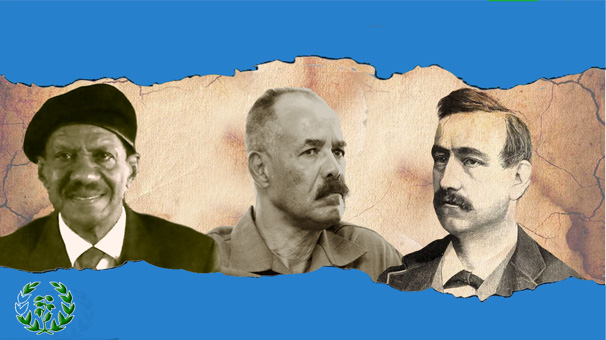
From Martini to Isaias Afwerki
This is edited and contextualized as a reflective opinion essay inspired by the book “Through the Eyes of a Colonizer” by Renato Paoli and translated by Ruth Tewelde There is something I keep running into whenever I read colonial-era books, and it never fails to surprise me. It’s the numbers. At the turn of the
-
Somaliland, Somalia, and the Ethics of Non‑Alignment
Recognition, Reality, and Responsibility in the Horn of Africa The recognition of Somaliland would mark a historic moment—akin to Eritrea or South Sudan—not a geopolitical earthquake, but a shift whose ripple effects could extend far beyond its borders. Global politics has a way of humbling our certainties: the developments we dismiss as peripheral often become
-
Eritrea at Year’s End: Between Endurance and Exhaustion
As another year closes—the thirty‑fourth since independence—Eritrea stands as a nation defined by contradiction. It is a country that endured colonial rule, international machinations, a short‑lived annexation disguised as a “UN‑supervised federation,” Cold War rivalries, a brutal thirty‑year liberation struggle, a devastating border war, and repeated regional upheavals, yet still struggles to define peace on
-
Eritrea Does Not Need Isolation to Survive
For more than three decades, Eritrea’s foreign policy has been shaped by fear—fear of betrayal, fear of encirclement, and fear that engagement is merely a prelude to domination. That fear was forged in war, and at one time it served a purpose. Today, however, it has calcified into a governing doctrine that no longer protects
-
Power, Image, and Machiavellian Survival (7)
Giants and Lilliputians of the HOA: Power, Image, and Machiavellian Survival Part Seven Introduction The central argument of this essay is simple: the Horn of Africa’s instability has never been caused by its diversity, but by leaders who repeatedly manipulate that diversity for political survival. Across Eritrea, Ethiopia, Sudan, Somalia, and Djibouti, rulers have taken
-

Beware, he has 139 million loyalists!
Dear Eritreans, this is a warning—you are expected to shudder with fear. The Ethiopians are 139 million people; they can easily swallow you! If they come for your cattle, your women, or your men, let them take it all. If they want your seashores, spread a red carpet—or roll the sea itself for them to
-

A Reckoning with Rhetoric: Responding to FM Gedion Timothewos on Ethiopia–Eritrea Relations
Introduction Dr. Gedion Timothewos, Ethiopia’s Foreign Minister, delivered a carefully curated address at AAU Ras Mekonnen Hall on November 13th, 2025, outlining Ethiopia’s policy toward the Horn of Africa, or more specifically, towards Eritrea. His tone was measured, his language diplomatic, and his framing deliberate crafted to cast Ethiopia as a stabilizing force amid regional
-
Power, Image, and Machiavellian Survival: Emperor Haile Selassie and President Isaias Afwerki
Two Towering Figures–Giants and Lilliputians (Part 1) Across the sorrowful and entangled histories of Ethiopia and Eritrea, two figures loom with spectral intensity: Emperor Haile Selassie I and President Isaias Afwerki. Their shadows stretch across generations, ideologies, and geopolitical fault lines—each a master of power, each a paradox incarnate. At the outset of their reigns,
-

Blame It on Moses
A young student and her classmate graduated together; she became a geography teacher, while her bright classmate was quickly absorbed into Abiy Ahmed’s party and appointed PR director of the Ethiopian Air Force. Today, he is hailed as an inspirational figure in that institution. By all accounts, he is doing a marvelous job. Recently, however,
-

Refugees Speak Back: Unsettling Exile and Home
In 2007, the Red Sea Press published Sadia Hassanen’s Repatriation, Integration, or Resettlement? The Dilemmas of Migration among Eritrean Refugees in Eastern Sudan. Based on her doctoral dissertation, the book quickly became one of the most important studies of Eritrean refugees in Kassala and surrounding camps. It asked a simple yet unsettling question: what or where
-
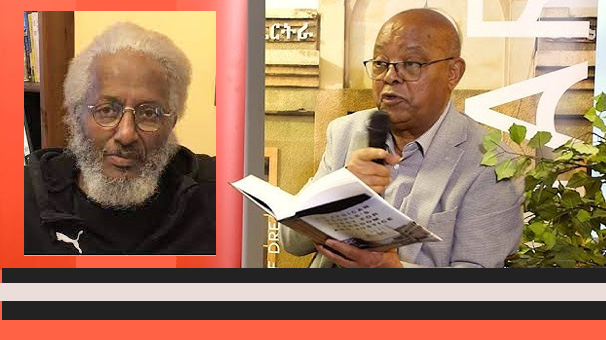
More Reflections on Alemseged Tesfai’s Epilogue
This is not a proper article but rather a collection of thoughts … I started off well, but I was too weak to continue. I was very surprised when I watched a video of a group of PFDJ supporters—the Eritrean regime’s party members—welcoming Alemseged in the embassy hall in London, clapping rhythmically in a rising
-
Ethiopia’s Double Standard: Talking Peace on the Nile, Hinting Force on the Red Sea
Assab is not just a port—it’s where Eritrea’s national story began. Calls for Eritrea to cede it ignore history, sovereignty, and the hard-won price of independence. Ethiopia champions international law on the Nile but risks undermining its credibility with threats over the Red Sea. True leadership requires consistency. Eritrea’s sovereignty over Assab is non-negotiable. Ethiopia…
-

The Panopticon Writes Back: On Plagiarism and AI Simulation
I built a café once, not of stone or steam, nor chairs with bentwood backs. It had no street address, yet it knew exactly where it stood: between memory and exile, between the watcher and the watched. In my novel I & Eye, I called it the Panopticon Café. It was where silences had dialects, and
-
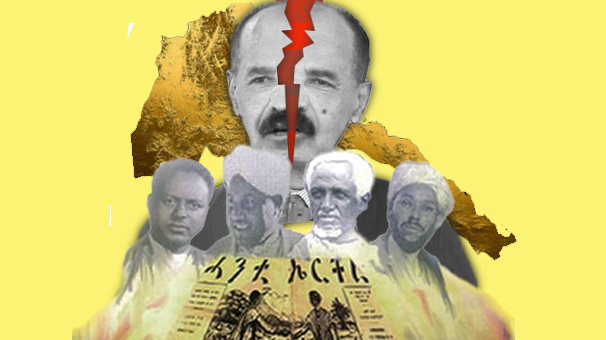
Eritrea’s Unanswered Question: 34 Years of Isaias Afwerki’s Rule
Eritrea’s Unanswered Question: What 34 Years of Isaias Afwerki’s Rule Reveal About Sovereignty and Survival In the beginning was the question—etched into the soul of the nation itself: Can Eritrea survive—and thrive—as a truly sovereign, independent state? For decades, global powers insisted we could not. Italy once tried to sell Eritrea to Belgium, citing economic
-
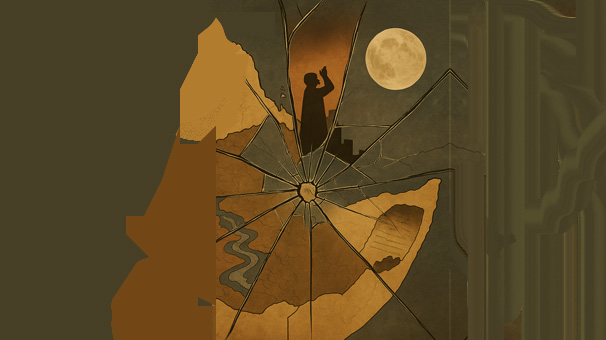
Beneath the Rooftop Howl: A Response to Tekeste Negash’s Historiography Shackled by Irredentism
“I saw the best minds of my generation destroyed by madness, starving, hysterical, naked, dragging themselves through the Negro streets at dawn looking for an angry fix…” Allen Ginsberg, Howl, 1956 Disclaimer: This is not a portrait of a man, but of a method. Tekeste Negash’s body may remain in Uppsala, but his arguments walk