
Tag: Isaias Afwerki
-

Protocol, Power, Policy, and the Urgent Need for Institutions
I. A Visit That Reveals More Than It Intended Eritreans have long relied on Awate’s Regional News link to follow developments across the Horn of Africa, a region where every diplomatic gesture carries weight. This week, one story in particular demanded attention: the visit of Eritrea’s minister of trade and industry, Nasreddin Saleh, accompanied by
-
The Elephant in the Room
I. The Meteor We Pretend Fell From the Sky There is a comforting story circulating in Eritrean political discourse – a story repeated so often, and with such ritualistic conviction, that it has become less an argument than a reflex. It tells us that the dictatorship is an alien force, a meteor that crashed into
-
The Day After: Preparing Eritrea for its Most Dangerous Transition
There comes a moment in the life of every nation when denial becomes a luxury it can no longer afford. Eritrea is approaching such a moment. Tick‑tock. The eventual death of President Isaias Afwerki—whether tomorrow or years from now—is not a political prediction but an unavoidable biological certainty. What follows will determine whether Eritrea survives
-
The Normalization of Self-Censorship in Eritrea
When self-censorship becomes pervasive, a society forfeits more than the right to open dissent; it forfeits the very conditions that make common knowledge possible – the shared awareness of what others know, think, and believe. In such an atmosphere, individuals can no longer reliably gauge the convictions of their peers or distinguish private doubt from
-
Trust Over Terror: Unity Built on a Minimum Agenda
Accra, Ghana. The very air here reminds me of what could have been for Eritrea. In the early 1990s, two nations stood at a crossroads. Ghana chose democracy, and today it stands as West Africa’s most stable and consolidated democracy. Eritrea, tragically, chose tyranny and has become a cautionary tale of what is broken in
-
The Eritrean Opposition Must Renounce Violence — Or Remain Irrelevant
The Eritrean opposition in the diaspora faces a credibility crisis so deep that it has become politically paralyzed by it. For more than three decades, it has positioned itself as the alternative to Isaias Afwerki’s rule. Yet inside Eritrea, even citizens who are profoundly dissatisfied with the government remain unconvinced that an opposition‑led transition would
-
Nehnan Elamanan: The Mother of the PFDJ
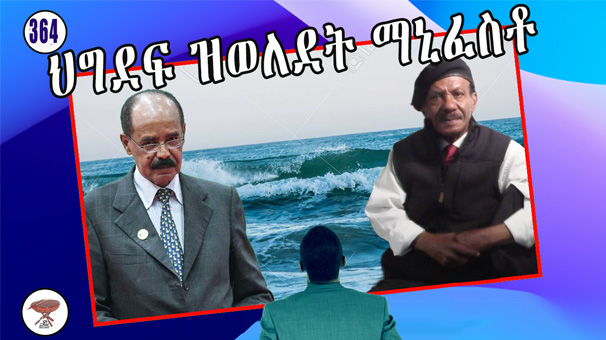
Isaias Afwerki’s Nehnan Elamanan manifesto transformed internal grievances into ideological justification for political separation and eventual monopoly power.
-
He and his objectives
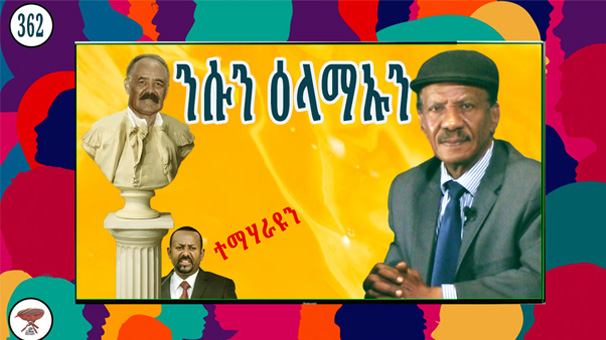
The first decade of the Eritrean struggle for independence, which began on September 1, 1961, was a period of experimentation and growing pains. By the late 1960s, however, a convergence of factors—the military setbacks of the field, the draining of regional Arab support following the Six-Day War, and the reach of sustained Ethiopian propaganda—pushed the
-
Unity or Irrelevance: The Eritrean Opposition’s Moment of Truth
Eritrea is no longer governed; it is controlled. The state has collapsed into one man. Eritrea is Isaias Afwerki. After more than thirty years in power, the ruling system has not only failed—it has stopped changing. Its thinking is stuck in the Cold War. Its actions are shaped by a past that no longer exists.
-
The Echoes of Stagnation: Reclaiming Eritrea’s Future
Through Internal Reckoning and Diaspora Strategy Unity has long eluded Eritreans. The word is invoked so frequently—and so casually—that it has lost much of its moral and political gravity. Yet its overuse does not diminish its necessity. Our repeated failure to achieve unity does not render it obsolete; it simply reveals that our methods have
-

The Golden and the Tin
The Greatest Generation A year ago, or a little longer, a female Eritrean YouTube content creator interviewed Ustaz Saleh Younis, during which he disclosed his preference for the Revolution generation, calling it the greatest generation. I had to second his preference and adopt it, mainly because there is ample evidence to support its validity. When
-
Iska Warran, Somalis; Tread Carefully!
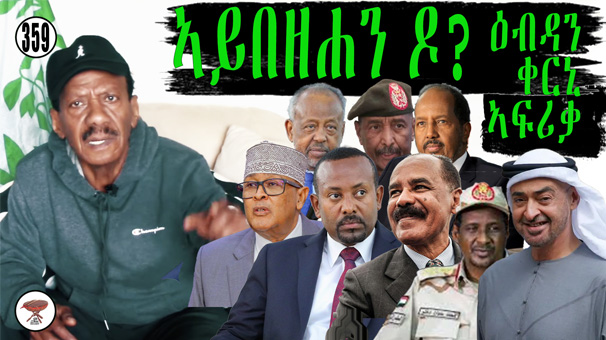
Drawing from Eritrea’s historical experience, the essay analyzes Somalia’s collapse, Somaliland’s resilience, Ethiopia’s controversial push for sea access, and the broader militarization of the Horn of Africa. It warns against foreign interference, empty nationalism, and elite-driven politics, advocating instead for people-centered dialogue and pragmatic, incremental solutions.
-
Zemihret Yohannes: A Revolutionary Legacy in Eclipse
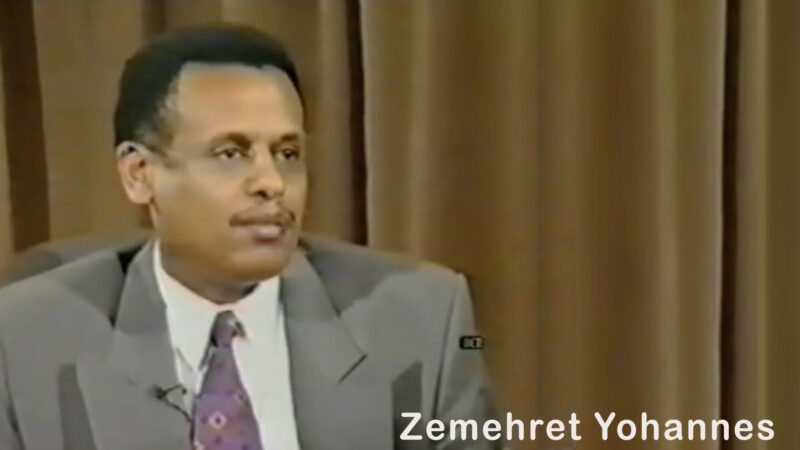
“Once reckless in the face of danger, Zemihret became a docile servant of power—how a roaring lion, at last, learns to purr.”
-
Eritrea at Year’s End: Between Endurance and Exhaustion
As another year closes—the thirty‑fourth since independence—Eritrea stands as a nation defined by contradiction. It is a country that endured colonial rule, international machinations, a short‑lived annexation disguised as a “UN‑supervised federation,” Cold War rivalries, a brutal thirty‑year liberation struggle, a devastating border war, and repeated regional upheavals, yet still struggles to define peace on
-
When Liberation Becomes a Cage: Eritrea’s Unlearned Lessons
Eritrea’s tragic trajectory—after one of the most heroic and costly struggles for independence in modern African history—remains one of the continent’s most heartbreaking stories. By 1991, when Eritrea finally achieved freedom, the lessons of post‑colonial governance were no longer abstract. They had unfolded across Africa and the Global South in full view. Yet, despite these
-
Power, Image, and Machiavellian Survival (7)
Giants and Lilliputians of the HOA: Power, Image, and Machiavellian Survival Part Seven Introduction The central argument of this essay is simple: the Horn of Africa’s instability has never been caused by its diversity, but by leaders who repeatedly manipulate that diversity for political survival. Across Eritrea, Ethiopia, Sudan, Somalia, and Djibouti, rulers have taken
-
Emperor Haile Selassie and President Isaias Afwerki – Part Six
Giants and Lilliputians: Power, Image, and Machiavellian Survival Emperor Haile Selassie and President Isaias Afwerki – Part Six 1 — Introduction The Two Propaganda Campaigns The Eritrean Liberation Front (ELF) became the target of a sustained campaign of political defamation—first from Emperor Haile Selassie’s Ethiopia, and later, far more powerfully, from the Isaias-led People’s Liberation
-

A Reckoning with Rhetoric: Responding to FM Gedion Timothewos on Ethiopia–Eritrea Relations
Introduction Dr. Gedion Timothewos, Ethiopia’s Foreign Minister, delivered a carefully curated address at AAU Ras Mekonnen Hall on November 13th, 2025, outlining Ethiopia’s policy toward the Horn of Africa, or more specifically, towards Eritrea. His tone was measured, his language diplomatic, and his framing deliberate crafted to cast Ethiopia as a stabilizing force amid regional
-
Giants and Lilliputians: Power, Image, and Machiavellian Survival (IV)
Giants and Lilliputians: Power, Image, and Machiavellian Survival Emperor Haile Selassie and President Isaias Afwerki (Part IV) The Seeds of Division within the Eritrean Liberation Front (ELF) Imperial Mythology and the Weaponization of Religion To understand the fragmentation of the Eritrean Liberation Front (ELF), the eventual triumph of the Eritrean People’s Liberation Front (EPLF), and
-
Giants and Lilliputians: Haile Selassie and President Isaias Afwerki (Part 2)
Power, Image, and Machiavellian Survival: The Body as a Mirror of Power To understand Isaias Afwerki’s psychology, one must first confront the contradiction written across his body. His appearance—spare, stiff, and strangely careless—betrayed none of the humility expected of a revolutionary. Nor did it reflect the ethos of the Tegadelti, whose plainness was once a