
Tag: Postcolonial Africa
-

Giants and Lilliputians: Haile Selassie and President Isaias Afwerki (Part 2)
Power, Image, and Machiavellian Survival: The Body as a Mirror of Power To understand Isaias Afwerki’s psychology, one must first confront the contradiction written across his body. His appearance—spare, stiff, and strangely careless—betrayed none of the humility expected of a revolutionary. Nor did it reflect the ethos of the Tegadelti, whose plainness was once a
-
Power, Image, and Machiavellian Survival: Emperor Haile Selassie and President Isaias Afwerki
Two Towering Figures–Giants and Lilliputians (Part 1) Across the sorrowful and entangled histories of Ethiopia and Eritrea, two figures loom with spectral intensity: Emperor Haile Selassie I and President Isaias Afwerki. Their shadows stretch across generations, ideologies, and geopolitical fault lines—each a master of power, each a paradox incarnate. At the outset of their reigns,
-
Horn of Africa: A Unity Deferred: Between Memory and Possibility
The Horn of Africa remains one of the world’s most fragile political landscapes. State legitimacy is contested, nation-building is stalled or unraveling, and war routinely eclipses peace. Ethiopia and Sudan, its two largest states, are engulfed in civil war and political upheaval. Somalia continues to fracture, with little more than nominal central authority. Eritrea and
-

In Conversation with History
The history of Eritrea cannot be reduced to isolated dates that mark the fall of emperors or the clashes of factions. It must be understood as a continuum in which missed opportunities, fratricidal tragedies, and enduring symbols converge into lessons still awaiting full reckoning. This essay considers three pivotal currents: the slow death of the
-
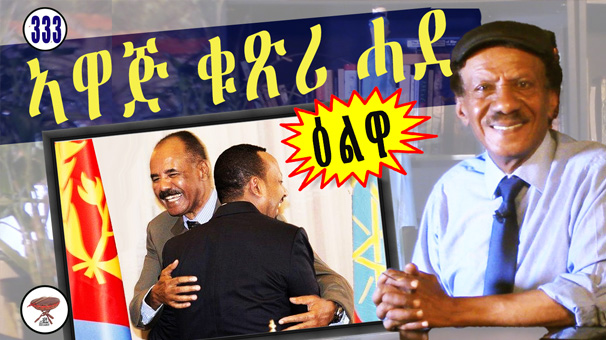
“Military Communique #1: Coup d’ Etat”
This was a common radio announcement, preceded by martial music and read in the deep voice of an officer. Immediately, fear engulfed listeners, followed by intense discussions and swirling rumors. Most people in the so-called third world instantly recognized it as a coup d’état—usually in a country they couldn’t even locate on a map. A
-
The Disease the Colonizers Left Behind – The River Remembers Series*
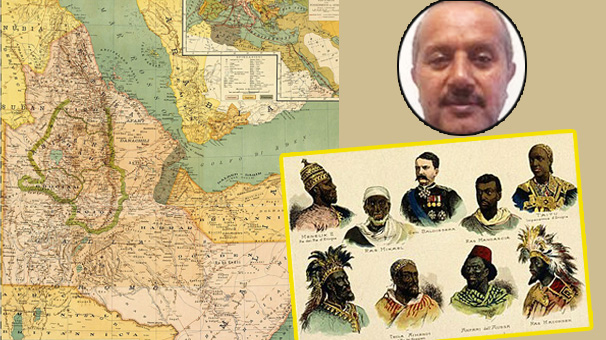
This first entry in The River Remembers series lays the foundation for a postcolonial reckoning across Sudan, Eritrea, Somalia, Djibouti, and Ethiopia. Blending historical analysis, cultural memory, and theoretical insight, the essay examines how different colonial powers left behind not only borders but ways of seeing—and mis-seeing—ourselves. With reference to thinkers like Fanon, Bhabha, and…