
Tag: eritrea
-
The Wound and the Cure: How Nehnan Elamanan Damaged Eritrea’s National Unity — and What a Truthful Manifesto Could Have Built Instead
Introduction: The Shadow of a Document There are moments in a nation’s history when a single document bends the arc of its political culture. Sometimes it elevates; sometimes it distorts. Nehnan Elamanan belongs to the latter category. Written in 1971, it did more than justify a factional split. It rewrote the moral grammar of the
-
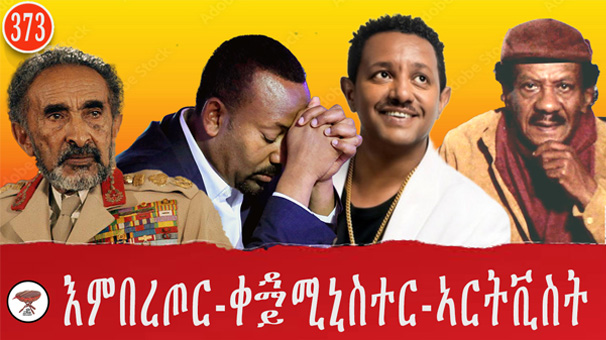
PM Abiy, Teddy Afro, and the Politics of Art
For the past few days, Teddy Afro’s new album has drawn wide attention. A friend told me its lyrics have irritated Prime Minister Abiy Ahmed’s government and sent me a clip of Abiy lecturing parliament about the difference between artists and activists. That pairing—music and political instruction—raises a deeper question: can art ever be separated
-
Protocol, Power, Policy, and the Urgent Need for Institutions
I. A Visit That Reveals More Than It Intended Eritreans have long relied on Awate’s Regional News link to follow developments across the Horn of Africa, a region where every diplomatic gesture carries weight. This week, one story in particular demanded attention: the visit of Eritrea’s minister of trade and industry, Nasreddin Saleh, accompanied by
-
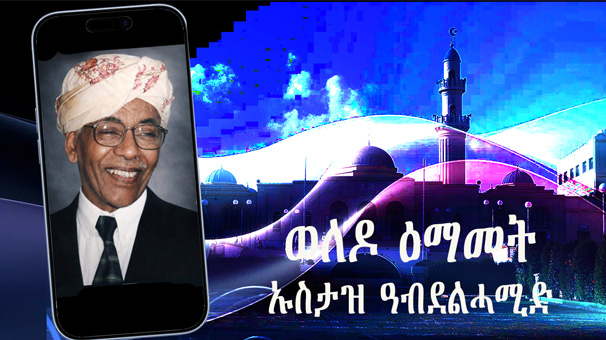
Ustaz AbdulHamid: Among the Few Left from the Umma Generation
It was Mendefera, on a January morning in 1929. The wife was expecting; soon, the child refused to remain in the womb and came into the world. An elderly midwife was there to help. The baby looked healthy. She was glad because her prediction had come true—it was a boy. Smiling, she cupped her hands
-
The Day After: Preparing Eritrea for its Most Dangerous Transition
There comes a moment in the life of every nation when denial becomes a luxury it can no longer afford. Eritrea is approaching such a moment. Tick‑tock. The eventual death of President Isaias Afwerki—whether tomorrow or years from now—is not a political prediction but an unavoidable biological certainty. What follows will determine whether Eritrea survives
-
OUR NATIONAL UNITY: Why Eritrea’s Political Imagination Fails Reality
I. The Illusion We Keep Rehearsing In recent weeks, I have been reading a series of essays on awate.on-forge.com – thoughtful pieces by Semere Habtemariam and Saleh Ghadi, attempting to stitch together a moral vision for Eritrea’s political future. They speak of unity, sacrifice, institutional maturity, historical awareness, and the enduring hope that principled action
-
The Normalization of Self-Censorship in Eritrea
When self-censorship becomes pervasive, a society forfeits more than the right to open dissent; it forfeits the very conditions that make common knowledge possible – the shared awareness of what others know, think, and believe. In such an atmosphere, individuals can no longer reliably gauge the convictions of their peers or distinguish private doubt from
-
National Unity Cannot Be Rebuilt One Community at a Time
Eritreans everywhere recognize the same painful truth: our nation is in deep crisis. Political paralysis, social fragmentation, and the mass flight of our youth have become defining features of our national condition. These burdens do not belong to one region or one religion. They belong to an entire people. My brother, the respected commentator Ismail
-
Trust Over Terror: Unity Built on a Minimum Agenda
Accra, Ghana. The very air here reminds me of what could have been for Eritrea. In the early 1990s, two nations stood at a crossroads. Ghana chose democracy, and today it stands as West Africa’s most stable and consolidated democracy. Eritrea, tragically, chose tyranny and has become a cautionary tale of what is broken in
-
The Eritrean Opposition Must Renounce Violence — Or Remain Irrelevant
The Eritrean opposition in the diaspora faces a credibility crisis so deep that it has become politically paralyzed by it. For more than three decades, it has positioned itself as the alternative to Isaias Afwerki’s rule. Yet inside Eritrea, even citizens who are profoundly dissatisfied with the government remain unconvinced that an opposition‑led transition would
-
What Has Unity Got to Do with Age?
Across Eritrean political discourse—especially within the diaspora—one argument has gathered unmistakable momentum: that leadership of the opposition, and indeed leadership of the Eritrean state itself, where the average age hovers around eighty, must pass to a new generation. At first glance, the demand feels not only reasonable but inevitable. Eritrea is a young nation with
-
The Three-Nakfa Gaze: When Poverty Is Put on Display
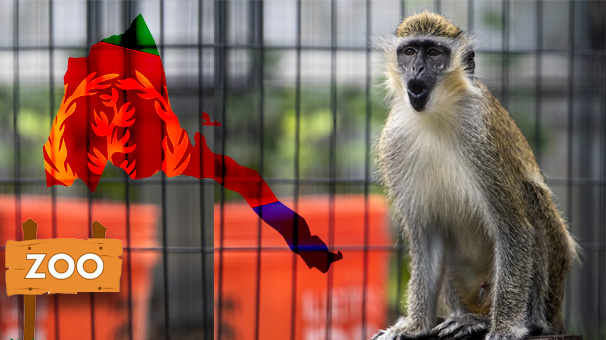
“Once deprivation is renamed ‘culture,’ it becomes protected from criticism. What appears as heritage can quietly function as camouflage, transforming material constraint into identity and turning urgency for change into an act that looks like disrespect. When citizens encounter one another primarily as curated displays, the relationship shifts from shared political belonging to observation, and…
-
Eritrea’s Opposition Has Run Out of Excuses
For more than three decades, Eritrea’s diaspora opposition has lived in a political waiting room—issuing statements, forming committees, dissolving committees, and then repeating the cycle with new names and old habits. The pattern has become so predictable that it no longer shocks anyone. Meanwhile, the regime in Asmera has ruled with total impunity: no constitution,
-
From Martini to Isaias Afwerki
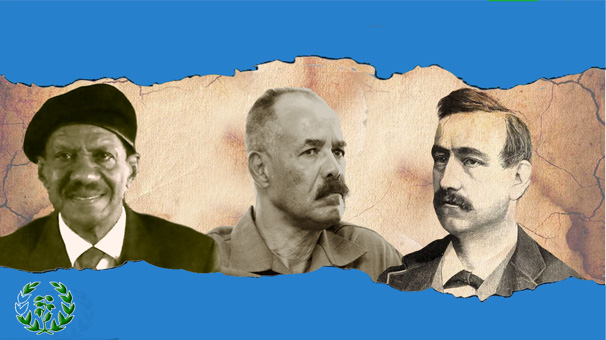
This is edited and contextualized as a reflective opinion essay inspired by the book “Through the Eyes of a Colonizer” by Renato Paoli and translated by Ruth Tewelde There is something I keep running into whenever I read colonial-era books, and it never fails to surprise me. It’s the numbers. At the turn of the
-

The Golden and the Tin
The Greatest Generation A year ago, or a little longer, a female Eritrean YouTube content creator interviewed Ustaz Saleh Younis, during which he disclosed his preference for the Revolution generation, calling it the greatest generation. I had to second his preference and adopt it, mainly because there is ample evidence to support its validity. When
-
Iska Warran, Somalis; Tread Carefully!
Drawing from Eritrea’s historical experience, the essay analyzes Somalia’s collapse, Somaliland’s resilience, Ethiopia’s controversial push for sea access, and the broader militarization of the Horn of Africa. It warns against foreign interference, empty nationalism, and elite-driven politics, advocating instead for people-centered dialogue and pragmatic, incremental solutions.
-
Somaliland, Somalia, and the Ethics of Non‑Alignment
Recognition, Reality, and Responsibility in the Horn of Africa The recognition of Somaliland would mark a historic moment—akin to Eritrea or South Sudan—not a geopolitical earthquake, but a shift whose ripple effects could extend far beyond its borders. Global politics has a way of humbling our certainties: the developments we dismiss as peripheral often become
-
Eritrea at Year’s End: Between Endurance and Exhaustion
As another year closes—the thirty‑fourth since independence—Eritrea stands as a nation defined by contradiction. It is a country that endured colonial rule, international machinations, a short‑lived annexation disguised as a “UN‑supervised federation,” Cold War rivalries, a brutal thirty‑year liberation struggle, a devastating border war, and repeated regional upheavals, yet still struggles to define peace on
-
When Liberation Becomes a Cage: Eritrea’s Unlearned Lessons
Eritrea’s tragic trajectory—after one of the most heroic and costly struggles for independence in modern African history—remains one of the continent’s most heartbreaking stories. By 1991, when Eritrea finally achieved freedom, the lessons of post‑colonial governance were no longer abstract. They had unfolded across Africa and the Global South in full view. Yet, despite these
-
Eritrea Does Not Need Isolation to Survive
For more than three decades, Eritrea’s foreign policy has been shaped by fear—fear of betrayal, fear of encirclement, and fear that engagement is merely a prelude to domination. That fear was forged in war, and at one time it served a purpose. Today, however, it has calcified into a governing doctrine that no longer protects