
Tag: eritrea
-
Nepal: A Lesson for the PFDJ and the Youth
Every era popularizes certain names—mainly names of rulers and prominent people of the time. Since the nineteen-forties and fifties, the name of a famous person that was often repeated in newspapers and radio bulletins has become popular; parents adopt the name for their babies. My aunt, (who is my cousin, but I called her aunt
-
Sept. 18, 2001: The Day Memory Was Criminalized
Eritrea’s Day of Infamy: The Day Liberty Died Some days do not merely pass into history—they haunt it. September 18, 2001, is one such day: a wound unhealed, a silence unbroken, a betrayal unforgotten. It is Eritrea’s Day of Infamy—the day memory itself was criminalized. It is the day the regime drained the oxygen of
-

A Shepherd, A Tiger Cub, and A Village
A shepherd boy, bored while tending his goats on the edge of a village, cried, “HELP! A tiger is attacking me!” The villagers rushed, swords in hand, to save him—only to be mocked when he admitted it was a joke. Angrily, they returned home. He repeated this again and again. But the fourth time, when
-

Horn of Africa: A Unity Deferred: Between Memory and Possibility
The Horn of Africa remains one of the world’s most fragile political landscapes. State legitimacy is contested, nation-building is stalled or unraveling, and war routinely eclipses peace. Ethiopia and Sudan, its two largest states, are engulfed in civil war and political upheaval. Somalia continues to fracture, with little more than nominal central authority. Eritrea and
-
Ageb and Eb, are these words alive in our languages!
I have talked and written hundreds of essays about reconciliation; the website I founded carried the slogan of reconciliation as a guiding principle. That’s because I believe it’s a vital precondition for a peaceful coexistence, unity, and stability. And citizens must be aware of the different social components—their culture, values, and grievances. Reconciliation requires awareness,
-
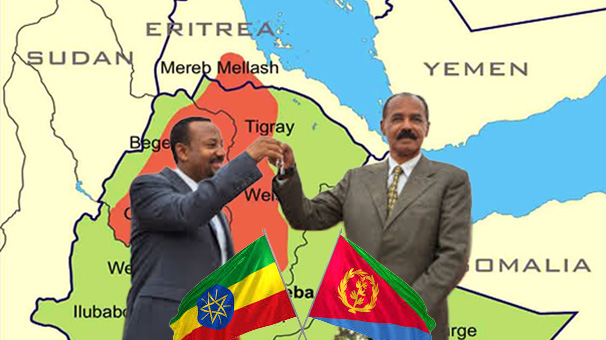
A Critique of Bereket Habtemariam’s Proposal on Sea Access and Sovereignty
Author’s Note: This essay is written in response to a document recently shared by Bereket Habtemariam on his Facebook (also known as Biko Steph). His contribution to the debate over Ethiopia’s access to the Red Sea is imaginative and provocative. Importantly, Bereket has been open that his intention is not to prescribe a final solution,
-
The Eritrean Opposition’s Double Bind
-

Eritrean Opposition Group Move Towards Merger
• “This move signals a potential end to decades of fragmentation among Eritrean opposition forces.”
-

More Reflections on Alemseged Tesfai’s Epilogue
This is not a proper article but rather a collection of thoughts … I started off well, but I was too weak to continue. I was very surprised when I watched a video of a group of PFDJ supporters—the Eritrean regime’s party members—welcoming Alemseged in the embassy hall in London, clapping rhythmically in a rising
-
Ethiopia’s Double Standard: Talking Peace on the Nile, Hinting Force on the Red Sea
Assab is not just a port—it’s where Eritrea’s national story began. Calls for Eritrea to cede it ignore history, sovereignty, and the hard-won price of independence. Ethiopia champions international law on the Nile but risks undermining its credibility with threats over the Red Sea. True leadership requires consistency. Eritrea’s sovereignty over Assab is non-negotiable. Ethiopia…
-
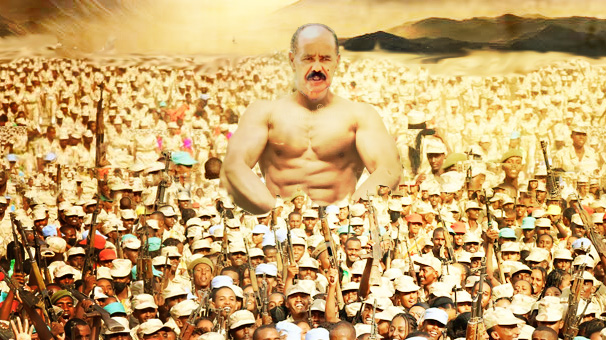
The Religion of Eritreanism in Exile
Author’s Note: This essay is not a tactical critique of government or opposition, but an attempt to reframe how we think about Eritreanism itself. I argue that in exile, Eritrean identity has taken on the qualities of a religion (sustained by longing, ritual, and taboo), which creates a pseudo-reality that confuses expression with political participation.
-
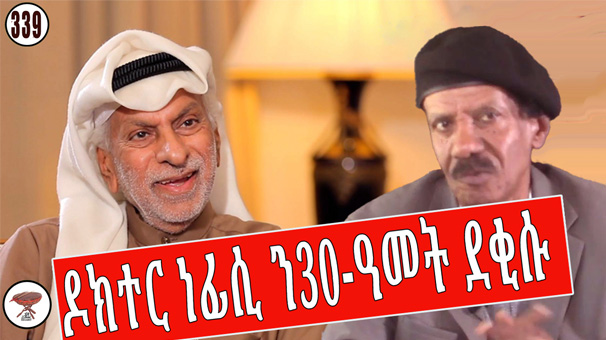
Dr. Abdella AlNafisi’s Thirty-year Sleep
By the end of the 1990s, the Islamist wave had reached its ebb. In 1988 Iraq invaded Kuwait and unleashed disaster. The USA arrayed its arsenal, and allies launched Desert Storm to reverse Saddam’s invasion. That heralded the beginning of a long, unstable era for the Middle East and beyond. In 1989 Sudan’s Islamist National
-

Reframing Eritrea’s Post-Independence Paradox
For more than three decades, the story of Eritrea has been told in a narrow and predictable register. It begins with the extraordinary military triumph of 1991, moves quickly to the UN-supervised referendum of 1993, pauses briefly on the promise of constitutional drafting, and then hammers home the familiar conclusion: a descent into authoritarianism and
-
Eritrea’s Missing Architects: The Intellectual Void Behind a Crippled Nation-Building
Eritrea’s liberation struggle stands as one of the most extraordinary military victories of the modern era. In 1991, the EPLF decisively defeated Ethiopian forces and freed the country. Yet instead of declaring independence immediately, it opted for a UN-supervised referendum in 1993—an exercise that yielded a predictable 99.83% result. Contrast this with the American Revolution,
-
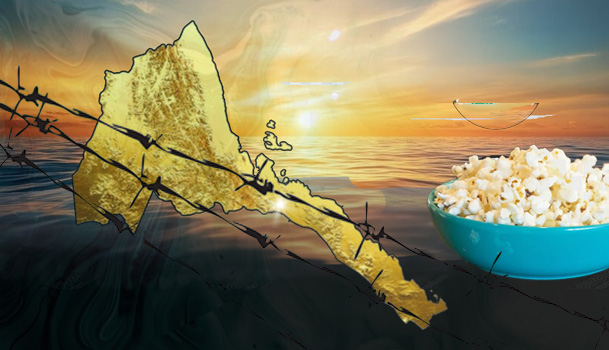
The Courage to Be Eritrean: Navigating a Moment of Crisis
Eritrea stands at a precipice, a chasm in the unfolding narrative of our nation. This juncture demands not merely the reflex of action, but a descent into the very core of our being—a profound interrogation of what it means to be Eritrean. As the shadow of Ethiopia’s threatened war for Assab looms, we are compelled
-
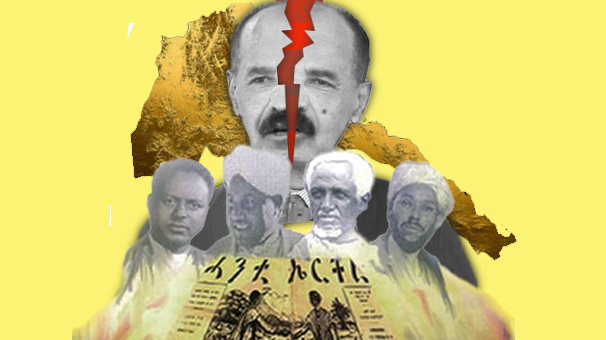
Eritrea’s Unanswered Question: 34 Years of Isaias Afwerki’s Rule
Eritrea’s Unanswered Question: What 34 Years of Isaias Afwerki’s Rule Reveal About Sovereignty and Survival In the beginning was the question—etched into the soul of the nation itself: Can Eritrea survive—and thrive—as a truly sovereign, independent state? For decades, global powers insisted we could not. Italy once tried to sell Eritrea to Belgium, citing economic
-
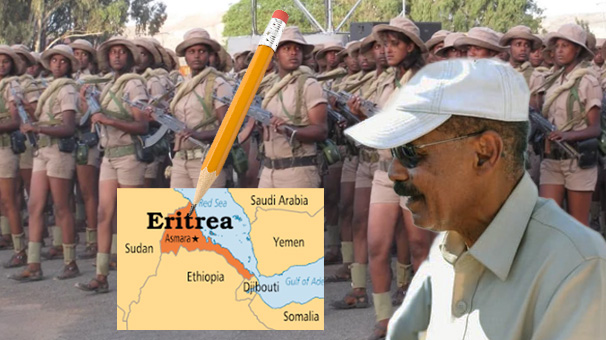
The Eritrean Regime and Its Neighbors
On May 24, 1991, Eritreans achieved their long-sought independence, formally recognized on May 24, 1993. Yet, true freedom remained elusive. The organization that became the ruling government legally solidified its hold—not through popular consent, but through brute force, injustice, and external alliances and considerations. Those early days were euphoric; few foresaw the wars and displacements
-

Ethiopia: The Graveyard of Eritrean Opposition Movements
Abstract: This article examines the structural, historical, and geopolitical constraints that have undermined the Eritrean opposition’s ability to bring about meaningful political change. It argues that the reliance on host states such as Ethiopia and Sudan has delegitimized opposition movements in the eyes of the Eritrean people. The article proposes a shift away from failed
-
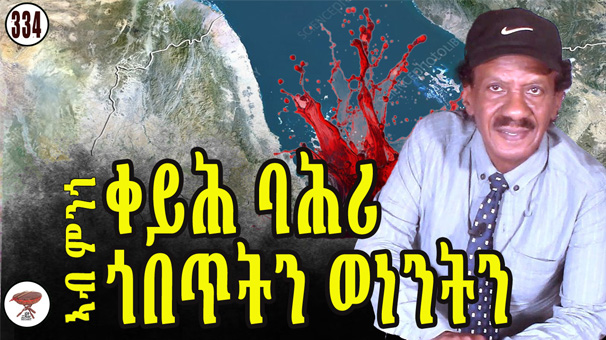
The Red Sea: Between Occupiers and Owners
To Eritreans, the Red Sea is all of the above; to invaders, it is just a port, a swinging door. They come and leave from the same door.